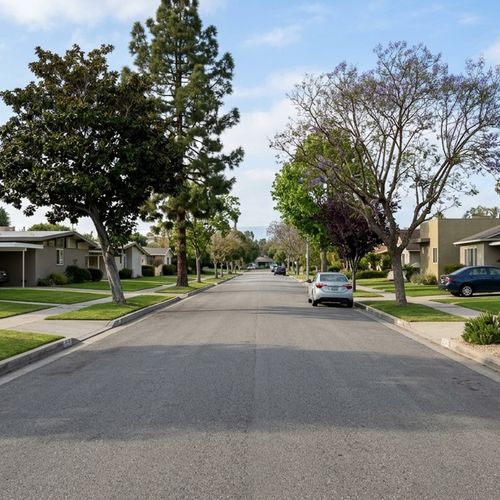


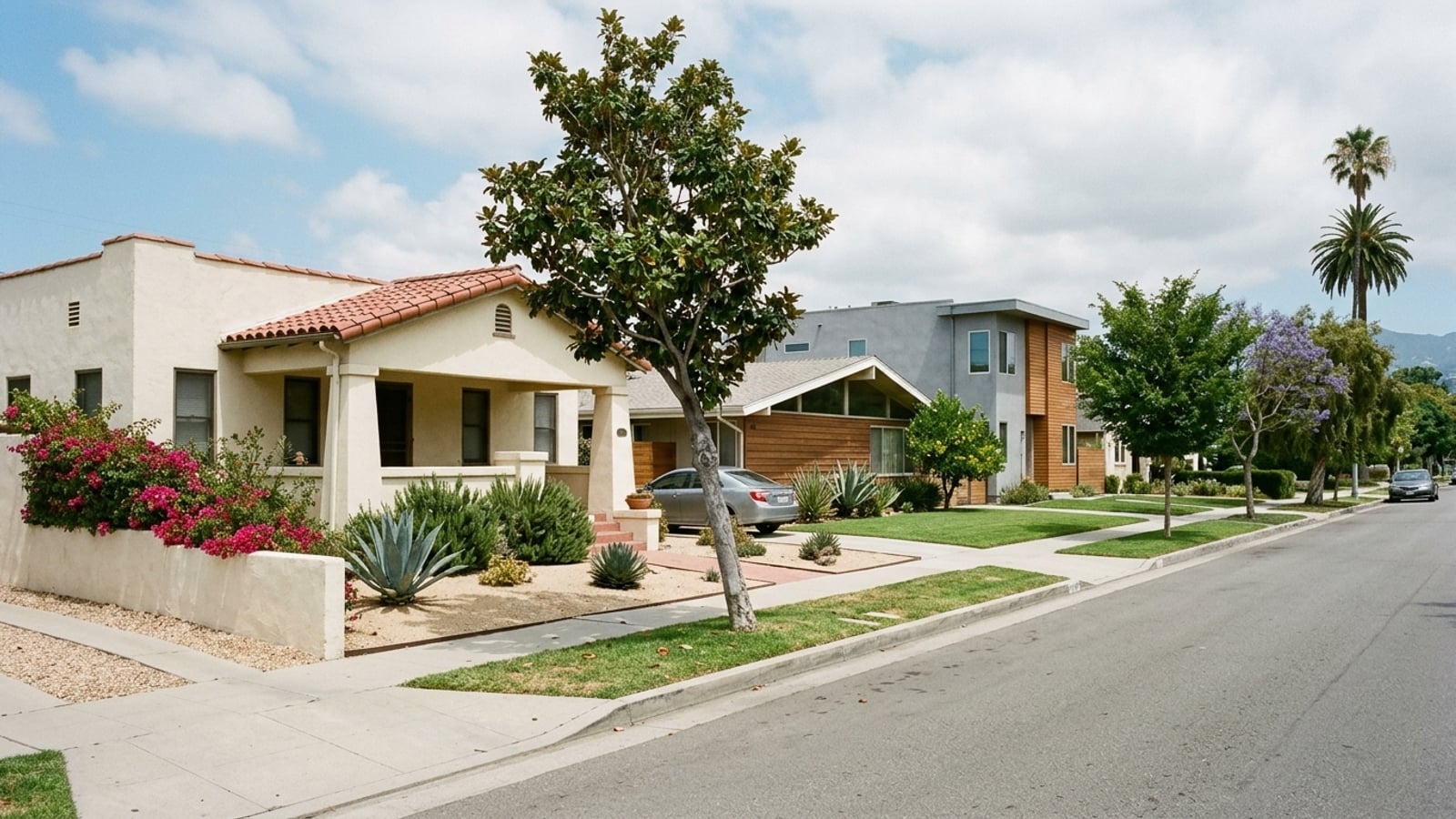
Mar Vista's weather is set by its place in the coastal marine-layer zone. City-wide Los Angeles forecasts and averages routinely overstate what summer feels like here.
Living in this neighborhood means gray early-summer mornings, a short and concentrated winter rain season, and a handful of hot, dry Santa Ana wind days scattered through the cooler months. Those patterns matter more to a home purchase than the region's year-round sunshine reputation, because they dictate everything from whether you need central air to how hard your roof gets hit when the rains finally arrive.
Key takeaway
Mar Vista has a mild coastal climate where the ocean's marine layer keeps summer highs cooler than downtown Los Angeles. Most of the year's rain falls between November and March. If you want summers that rarely call for heavy air-conditioning use, Mar Vista suits you, but if you'd rather trade gray mornings for more sun, inland neighborhoods are the better alternative.
Who this guide is for
You're considering a home in Mar Vista and want to know what the weather is like across a full year, and what it means for the house you choose.
What is the weather like in Mar Vista?
Coastal areas of the Los Angeles metro, including Mar Vista, fall under a warm-summer Mediterranean climate classification. Inland areas shift to a hot-summer Mediterranean climate, which creates a noticeable temperature gap between the beach and the rest of the city.
The official weather station closest to the neighborhood is at Santa Monica Airport, which sits right on the border of Santa Monica and Mar Vista. Because the neighborhood is so close to the Pacific Ocean, daily life is shaped by morning cloud cover and afternoon sea breezes far more than by extreme heat.
If you need the forecast for the next ten days, check the National Weather Service Los Angeles office.
Mar Vista weather by season
May Gray and June Gloom mark the transition from spring to summer. During these months, a marine layer forms when cooler ocean air moves inland, creating morning clouds and fog that often evaporate by midday. If gray, cool mornings from May into early July would bother you, this coastal pattern is the price you pay for mild summers.
Late summer into early fall brings the warmest stretch of the year. While the rest of the city bakes in July, Mar Vista often sees its highest temperatures arrive in September. Worth checking before you fall in love with a house: whether it has central air or relies entirely on cross-ventilation.
Winter brings a short, concentrated rain season. Storms arrive in bursts, and most of the year's precipitation falls in just a few months, testing a property's drainage and gutters in a tight window. Spring is a brief transition before the marine layer thickens again, offering clear days and mild temperatures before the early-summer clouds return.
Average temperatures and rainfall by month
Inland stations like Downtown USC record a January average maximum of 68 degrees. Mar Vista's coastal proximity keeps its winter days similarly mild, but its summer peaks run noticeably lower than what you'd find a few miles east. The warmest month typically arrives in late summer, pushing afternoon temperatures high enough that air conditioning matters in some homes. Overnight lows in the coolest months drop to a point where you'll want standard home heating, though the swing between a typical August afternoon and a January night is narrower here than inland.
Most of the year's rain falls in a few winter months, so a house's drainage gets tested in a short window. Ask your inspector to pay close attention to the roof and gutters, because they sit largely unused for most of the year before taking on heavy downpours.
How Mar Vista weather compares with the beach and inland Los Angeles
Closer to the coast means cooler and grayer. Farther inland means sunnier and hotter. Downtown Los Angeles normals show warmer summer highs than the Santa Monica Airport station, which makes Mar Vista a reasonable choice if avoiding heavy air-conditioning use is a priority for you.
Some parts of the neighborhood sit on higher ground. Mar Vista Hill has an approximate elevation of 105 feet above sea level, which can offer better views and catch more of the afternoon sea breeze than the surrounding flats, helping to clear the morning fog a bit faster.
The tradeoff is straightforward: the same marine layer that keeps summers mild also keeps early-summer days gray until the afternoon. If you're moving to Southern California specifically for morning sun every day, neighborhoods farther inland will serve you better.
Santa Ana winds, wildfire smoke and winter storms
Santa Ana winds are most common during the cooler months from September through May, with a peak between November and January. These winds bring hot, dry, gusty days and can push smoke from regional wildfires into the area. If you're sensitive to smoke or dry wind, check AirNow for air quality during these events.
Look up any address you're seriously considering on the CAL FIRE Fire Hazard Severity Zone map before making an offer, and ask the seller about any related hazard disclosures. Also check the FEMA Flood Map Service Center, as Mar Vista is covered by the Santa Monica/Mar Vista/Venice panel area near the Ballona Creek watershed.
Snow is effectively a non-event. The beaches of Santa Monica were last coated in snow during a January 1932 storm, and measurable snow has reached downtown Los Angeles only a handful of times since California statehood. Extreme weather is rare here, but these seasonal patterns mean a house's ventilation, filtration, and drainage deserve more scrutiny than a mild-climate reputation might suggest.
What Mar Vista's climate means for the home you buy
The Mar Vista area, specifically ZIP code 90066, is designated as Building Climate Zone 6 by the California Energy Commission. That classification influences insulation standards and cooling expectations for local homes, meaning properties are built to handle mild coastal temperatures rather than desert heat.
When you're touring a property, ask the seller whether it has central air or relies on the ocean breeze and cross-ventilation. Pay attention to how west-facing rooms handle the late-afternoon sun in September. The morning marine layer is persistent enough to cause moisture issues in older homes, so ask your inspector to check carefully for moisture or mildew.
Before planning any landscaping, check the Los Angeles Department of Water and Power's current outdoor watering days and rules. If you'd like help reading an inspection report with these climate points in mind, Charles Fisher can walk you through it. Review our guide to buying a home in Mar Vista for more on the purchase process.
Mar Vista weather and the housing market
The local climate should shape how you schedule your tours. With single-family homes recently showing a 60-day median time on market and about three months of supply, you generally have room to see a property more than once.
Visit on a gray morning and again on a warm afternoon. A home that feels perfectly lit at noon might feel damp and dim during June Gloom, and that difference matters when you're deciding where to live.
Check the local housing market page for a full breakdown of pricing trends. Our pros and cons guide covers the non-weather factors shaping the neighborhood.
At a glance
- Median sale price, all homes: $2,319,350 (90 days ending 2026-09-30, 83 sales)
- Median sale price, single family: $2,599,568 (90 days ending 2026-09-30, 71 sales)
- Median price per square foot: $1,079 all homes; $1,101 single family (90 days ending 2026-09-30)
- Median days on market, single family: 60 (90 days ending 2026-09-30)
- Months of supply, all homes: 3.1 (90 days ending 2026-09-30)
- Share of all homes sold above list price: 32% (90 days ending 2026-09-30)
Mar Vista weather FAQs
Do you need air conditioning in Mar Vista?
It depends on your heat tolerance and the home's layout. Late summer and early fall bring the warmest days, and Santa Ana winds peak between November and January, driving up temperatures. Ask the seller whether the home has central air and how old the system is.
Does it ever snow in Mar Vista?
No, snow is effectively a non-event. Measurable snow has reached downtown Los Angeles only a handful of times since statehood, and the nearby Santa Monica beaches have not seen snow since a historic storm in January 1932.
Is Mar Vista humid?
It can feel damp in the mornings due to the coastal marine layer, but humidity generally drops by the afternoon once the sun breaks through. Moisture issues are worth watching for in older homes, particularly in rooms that face away from the afternoon breeze.
How far is Mar Vista from the beach?
Mar Vista is just a few miles inland from Venice Beach and the Pacific Ocean. That proximity is exactly why the neighborhood's daily weather is shaped so strongly by the marine layer and afternoon sea breezes.
Is Mar Vista in a high fire hazard severity zone?
Fire hazard zones can vary down to the specific parcel. The CAL FIRE Fire Hazard Severity Zone map lets you look up any address, and the seller is required to disclose any related hazards before closing.
Is Mar Vista expensive?
Yes, housing costs reflect the area's coastal proximity. Recently, the median sale price for all homes was $2,319,350, with properties selling for a median of $1,079 per square foot. Check our local housing market guide for detailed pricing trends.
Is Mar Vista part of the city of Los Angeles?
Yes, Mar Vista is a neighborhood within the City of Los Angeles and has its own neighborhood council. City services and Los Angeles Department of Water and Power rules apply to homes here.
Sources
Check out this article next