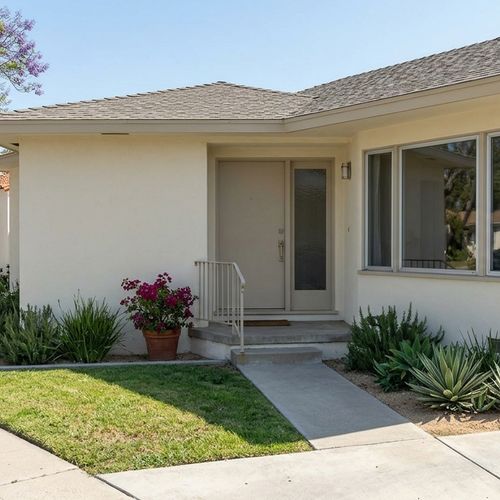


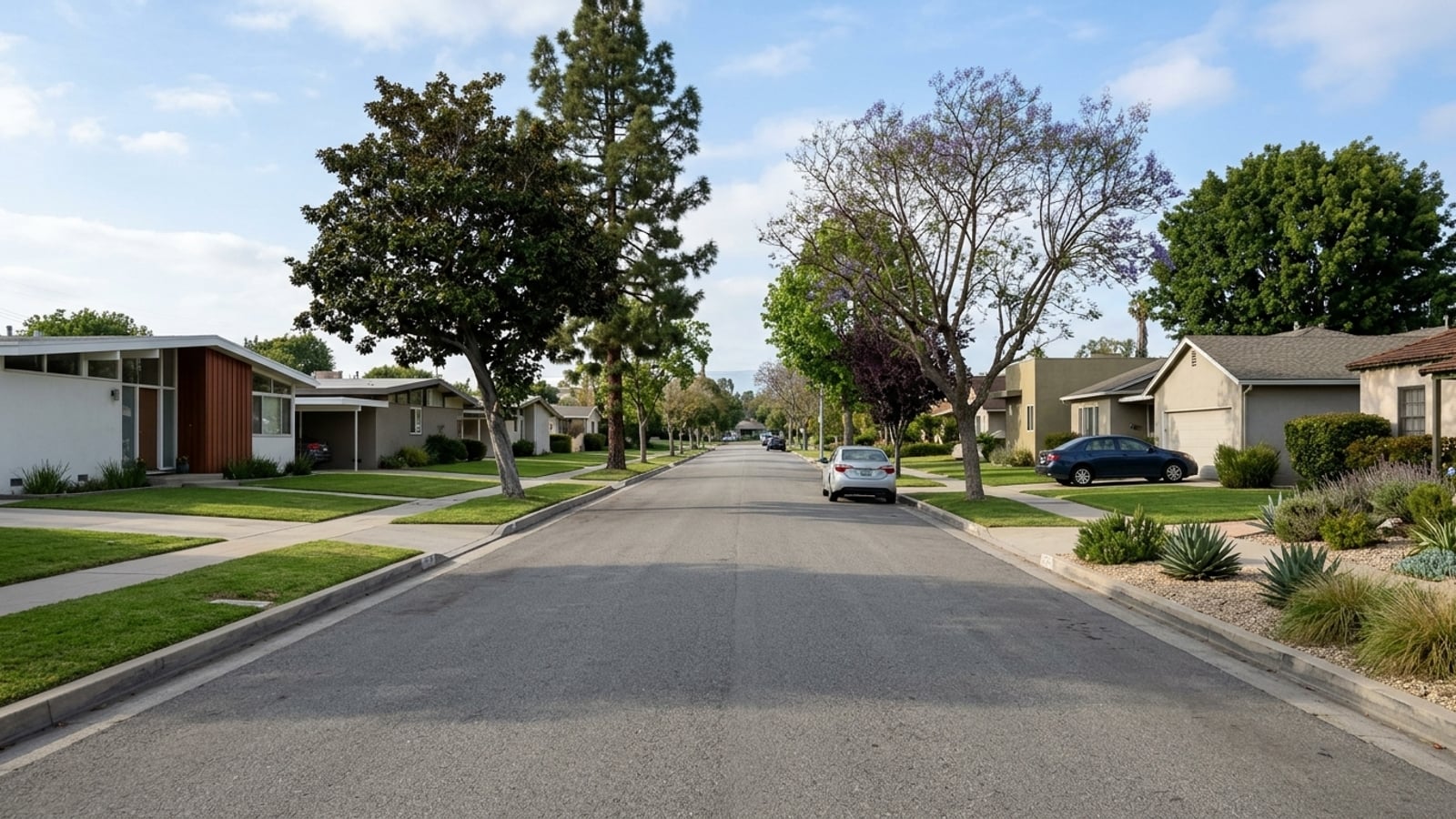
Mar Vista is still the detached-house suburb its postwar tracts built. In the 90 days ending September 30, 2026, most homes sold here were single-family properties. The local market relies on these mid-century lots, and the rules governing them dictate what you can buy and build today.
The piece of history a buyer most needs isn't the founding date. It's whether a house sits inside a historic overlay where the design is protected, or on ordinary postwar blocks where standard city zoning applies. That difference determines whether you can add an accessory dwelling unit, expand a floor plan, or simply update a roof.
Key Takeaway
Mar Vista, whose name is Spanish for "sea view," grew from rancho land into a postwar suburb of single-family houses inside the City of Los Angeles. That history still defines the market, as houses made up 71 of the 83 sales in the 90 days ending September 30, 2026. If you want original mid-century modern design, start with the Mar Vista Tract. If you'd rather have room to expand or add a unit, look at postwar blocks outside its historic overlay.
Who This Guide Is For
You're researching Mar Vista's past to understand what kind of houses and streets you'd be buying into, and whether a home's history will limit what you can change about it.
Why Mar Vista's History Matters When You Buy Here
The median single-family home price in Mar Vista recently reached roughly $2,599,568, a 7% increase compared to the same 90-day window a year earlier. Houses built in the postwar era are what drive this market, so a property's tract and overlay status shapes its price.
Buyers face a split between areas where history is protected and areas that keep changing. A home inside a historic overlay locks in the block's original design but reviews your exterior changes. Ordinary postwar blocks use standard city zoning that governs what you can add or build.
Mar Vista History Timeline
Mar Vista's timeline is a progression from open grazing land to uniform house lots. Each era left specific rules and housing types that buyers inherit today.
This progression from the rancho days to the present explains the street grid, the age of the houses, and the city regulations that apply to renovations.
Rancho La Ballona and the Farm Years
Rancho La Ballona was a 13,920-acre Mexican land grant confirmed by Governor Juan Alvarado in 1839 to Ygnacio and Agustín Machado and Felipe and Tomas Talamantes. They had earlier received a Spanish grazing concession on this land in 1819. Until the 1940s, Mar Vista remained primarily a farming community, and its dry-farmed lima beans gained a national reputation.
The rancho era left place names and a street grid more than buildings. Don't expect to find rancho-era structures on today's blocks.
How Mar Vista Got Its Name
The name Mar Vista is Spanish for "sea view," reflecting the hillside views of the ocean that earlier developers advertised. From 1904 to 1924, the area was called Ocean Park Heights. The Ocean Park Heights subdivision developed along a rail line built in 1902 that today is Venice Boulevard.
The name promises a sea view that most flat blocks don't have. Confirm any ocean view in person from the specific house, not from the neighborhood name or a listing photo.
Joining the City of Los Angeles
In 1927, Mar Vista voted to join Los Angeles, becoming the 70th community annexed into the city. It falls within the City of Los Angeles's 11th Council District. Because it didn't incorporate as an independent municipality, decisions on zoning, preservation, and street changes are made citywide.
With no separate city hall, residents can't settle a local land-use question on their own. The Mar Vista Community Council acts as an advisory board to the Los Angeles City Council, with its jurisdiction restricted to that advisory role.
The Postwar Housing Boom
The late-1940s and 1950s tract building produced most of today's detached houses on uniform lots. This is why the local market is still almost entirely single-family properties. Because few original houses hit the market at once, choice at any moment is narrow. There were 64 single-family homes for sale in the 90 days ending September 30, 2026.
Many houses from this era are decades old with original systems. Confirm the year built in county assessor records and budget for a full inspection of plumbing, electrical, and foundations rather than assuming updates have been made.
Mar Vista in Recent Decades
Recent decades have brought changes to Mar Vista's commercial spaces and residential lots. The farmers market has become a weekly anchor, and postwar lots are seeing growing rebuild and accessory dwelling unit activity. This recent history splits the neighborhood between preserved blocks and streets undergoing continuous change.
Commuting patterns have evolved alongside all of this. Drive your commute route along Venice Boulevard at rush hour before buying nearby, not on a Saturday afternoon when the street looks perfectly manageable.
Where Mar Vista's History Is Preserved
Certain parts of Mar Vista are fixed in place by law or public ownership. These sections appeal to buyers who value an intact streetscape and don't mind strict rules on property changes.
These areas require buyers to accept that they cannot freely alter their home's exterior. The preservation rules protect the neighborhood's design at the cost of individual flexibility.
Mar Vista Tract
The Gregory Ain Mar Vista Tract consists of 52 parcels designed by architect Gregory Ain in the Modern style. Ain designed the development with Joseph Johnson and Alfred Day, and it was completed in 1948. The grounds were designed by Garrett Eckbo, who planned a park-like setting without fences or walls, featuring generous front setbacks and common backyards. In 2003, the city adopted the tract as its first post-World War II Historic Preservation Overlay Zone (HPOZ).
You pay a premium for that protected design, with single-family homes selling at a median of $1,101 per square foot. The downside is real: exterior changes, additions, and some window or roof work go through HPOZ review, which adds time and can rule out a planned expansion entirely. Ask Los Angeles City Planning which exterior changes require review before buying with a remodel in mind.
Mar Vista Gardens
Mar Vista Gardens is a mid-century public housing community completed in 1954 as one of the postwar slum clearance measures inspired by the Federal Housing Act of 1949. It's the Housing Authority of the City of Los Angeles's westernmost public housing property. The development consists of 601 townhomes on 43.2 acres adjacent to Culver City. You can read more about the property on our Mar Vista Gardens page.
You can't buy into the complex. It's publicly owned rental housing, so anyone interested in living there must go through the HACLA application process.
Where Mar Vista Keeps Changing
Outside the historic overlays, standard city rules allow streets and houses to evolve. These areas offer more freedom to expand or rebuild, which is why they see constant construction activity.
The trade-off for that flexibility is that your neighbors have the same rights. The block around you can change completely as original houses are replaced or expanded over time.
Venice Boulevard and Grand View Boulevard
Venice Boulevard began as an unpaved right-of-way laid out in 1902 when the Los Angeles Pacific railroad constructed a line connecting downtown Los Angeles to the sea. The Venice Short Line became part of the Pacific Electric system in 1906, and the famous Red Car trolleys ran down the middle of the street until 1950. That streetcar history explains the road's wide right-of-way, which now hosts Mar Vista's commercial strip and shops near Grand View Boulevard.
You can read more about daily life near these streets on our pros and cons of living in Mar Vista page. Houses facing or backing onto Venice Boulevard trade walkability for traffic noise. Visit at different hours and check whether a listing's lot fronts the boulevard. New residents can check things to do in Mar Vista for local activity options.
Mar Vista Hill
Mar Vista Hill is the higher ground that best fits the neighborhood's original "sea view" marketing. This area offers potential sightlines of the ocean and the surrounding city. For pricing details on these hillside homes, compare our most expensive areas in Mar Vista guide.
A view isn't legally guaranteed. Check the zoning on neighboring and downhill lots, because a rebuild next door could block your sightline.
Postwar Blocks Outside the Historic Overlay
Most of Mar Vista's postwar streets are not in an HPOZ. Standard city zoning governs additions, full rebuilds, and ADUs on single-family lots. Under the LA Municipal Code, an ADU may be created on any lot that contains a dwelling, with attached ADUs capped at 50% of the existing home's floor area and detached ADUs capped at 1,200 square feet.
The single-family median time on market is 60 days. That's enough time to pull permit history and look up the property in the city's ZIMAS parcel tool to confirm zoning before making an offer. What you give up is neighborhood consistency. Original houses around you can be replaced or expanded, so the block you buy into may look entirely different in a few years.
How to Use Mar Vista's History to Narrow Your Search
Your search depends on whether a street's history will limit what you want to do with the property. If you plan to change the exterior, add square footage, or build an ADU, read Postwar Blocks Outside the Historic Overlay and check a property's ZIMAS record before you make an offer. If you'd rather a street's original design stay protected, read Mar Vista Tract.
For buyers who want original mid-century modern architecture, start with the Mar Vista Tract and the history of the postwar housing boom. If you want to walk to shops, cafes, and a weekly farmers market, focus on Venice Boulevard and Grand View Boulevard.
If a view is part of what you're paying for, look at Mar Vista Hill and compare prices across the area. Charles Fisher can pull a property's overlay status and permit history before you submit an offer.
Ask the seller for the permit history and any original plans, and confirm the permits with the Los Angeles Department of Building and Safety. Confirm the year built and lot size in Los Angeles County Assessor records rather than relying on the listing.
Mar Vista Housing Market at a Glance
Other property types had too few sales to report separately. You can review housing market trends or read our buying guide for the purchase process, and owners of historic or original houses can check our selling a home guide for listing strategies.
- Median sale price, all homes: $2,319,350 (90 days ending 2026-09-30)
- Median sale price, single-family: $2,599,568 (90 days ending 2026-09-30)
- Year-over-year change in median sale price: +2.4% all homes; +7% single-family (90 days ending 2026-09-30)
- Homes sold: 83 all homes; 71 single-family (90 days ending 2026-09-30)
- Median price per square foot: $1,079 all homes; $1,101 single-family (90 days ending 2026-09-30)
- Median days on market: 61 all homes; 60 single-family (90 days ending 2026-09-30)
- Sale-to-list ratio: 100.2% all homes; 100.6% single-family (90 days ending 2026-09-30)
- Share sold above list price: 32% all homes; 34.2% single-family (90 days ending 2026-09-30)
- Months of supply: 3.1 all homes; 2.7 single-family (90 days ending 2026-09-30)
- Homes for sale (inventory): 84 all homes; 64 single-family (90 days ending 2026-09-30)
Mar Vista History FAQs
What Is Mar Vista Known For?
Mar Vista is known for the Gregory Ain Mar Vista Tract, its postwar single-family streets, and the Sunday farmers market near Venice and Grand View. The Mar Vista Tract consists of 52 parcels designed in the Modern style and became the city's first post-World War II HPOZ in 2003.
Is Mar Vista Its Own City or Part of Los Angeles?
Mar Vista is a neighborhood within the City of Los Angeles, located in Los Angeles County. It falls within the city's 11th Council District and doesn't have its own city government. Its community council serves in an advisory role to the Los Angeles City Council.
How Far Is Mar Vista From the Beach?
Mar Vista is about 2 miles from Venice Beach and roughly 4 miles, or about a 13-minute drive, from the beach in Santa Monica. Check the drive time from a specific address at the hour you plan to travel.
Does Mar Vista Have a Downtown?
Mar Vista doesn't have a formal downtown. Its commercial heart runs along Venice Boulevard near Grand View Boulevard, where the Mar Vista Farmers Market operates Sundays from 9 am to 2 pm.
Is Mar Vista a Wealthy Neighborhood?
The all-homes median sale price in Mar Vista was $2,319,350 in the 90 days ending September 30, 2026. Single-family homes price even higher, as detailed in the at-a-glance list above.
Is Mar Vista Safe?
To evaluate crime in Mar Vista, review the LAPD's official crime mapping for the specific blocks and time window you care about. Use that same mapping method for every area you compare to get consistent data.
Is There a Mar Vista Historical Society?
There's no dedicated Mar Vista historical society. You can find local history through the Mar Vista Community Council, Los Angeles Public Library local history collections, and City Planning HPOZ documents, which detail the area's past as a dry-farmed lima bean community.
What Is the Price Per Square Foot in Mar Vista?
The all-homes median price per square foot in Mar Vista was $1,079 in the 90 days ending September 30, 2026. The single-family figure is slightly higher and is included in the at-a-glance list. You can review our housing market page for ongoing trends.
Sources
- Redfin: Data Center
- Online Archive of California: Finding Aid
- Los Angeles City Clerk: Council File
- Mar Vista Community Council: Correspondence
- Los Angeles City Planning: Gregory Ain Mar Vista Tract
- Los Angeles Conservancy: Mar Vista Tract
- Housing Authority of the City of Los Angeles: About Public Housing
- Mar Vista Community Council: Venice Boulevard History
- Los Angeles City Planning: ZIMAS
- Los Angeles City Planning: ADU Ordinance
- Mar Vista Farmers Market: Official Site
- Rome2Rio: Mar Vista to Venice
Check out this article next