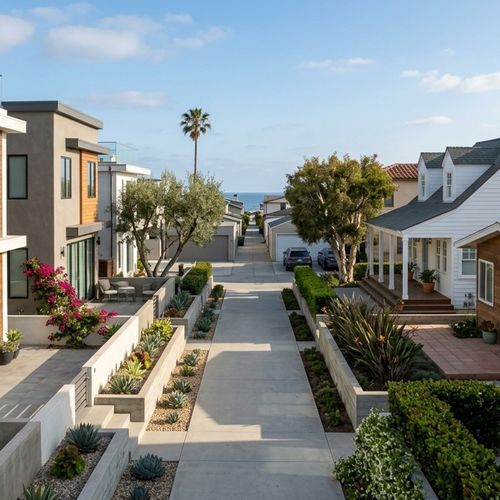


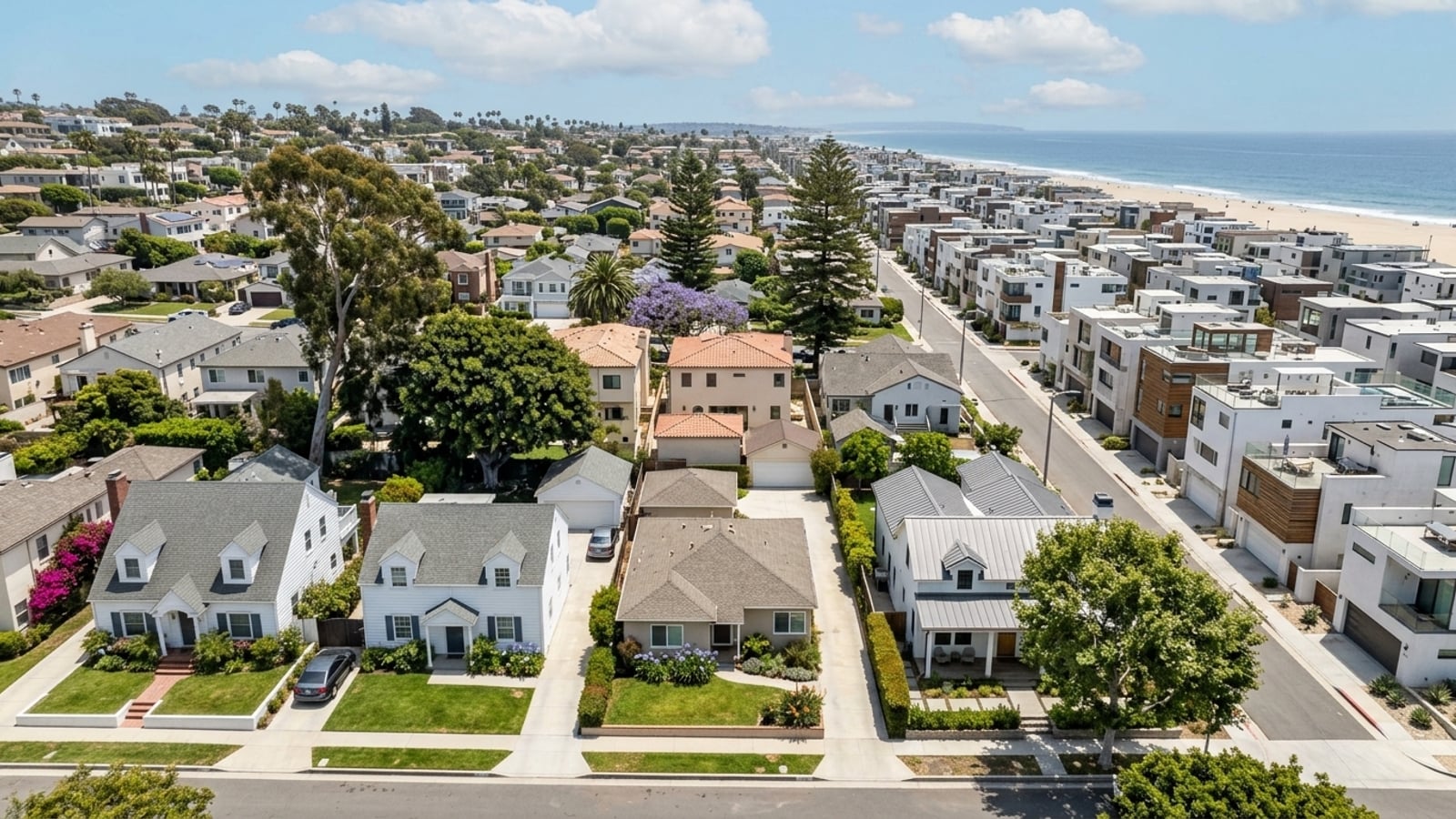
Manhattan Beach, CA gives buyers a genuine choice between two very different lifestyles - and the gap between them is wider than most people expect before they start looking. The two best neighborhoods in Manhattan Beach you'll almost always end up comparing are the coastal strip called the Sand Section and the inland neighborhood known as the Tree Section. Both cost serious money. The overall Manhattan Beach median sale price is sitting around $3.49 million right now, with homes spending roughly 40 days on the market.
What separates these two neighborhoods comes down to lot dimensions, zoning rules, and how close you want to be to the water. The Sand Section includes The Strand and Downtown Manhattan Beach - you're steps from the ocean. The Tree Section sits just inland, bordered by Sepulveda Boulevard, with larger lots and considerably easier access to major commute routes. Neither is wrong. They're just different priorities.
Current Home Prices and Market Trends
The market here moves. Recent data shows 106 homes sold citywide, with about 74 available listings at any given time - and roughly 26% of those recent sales closed above asking price. When you're comparing the Sand Section vs Tree Section, price tags shift depending on the street, the lot size, and whether there's a view involved.
Citywide median prices hovered around $3.7 million over the last year, but that number does real work hiding the differences between the two neighborhoods. Luxury sales near the water skew things considerably. A Sand Section home formerly owned by Maria Sharapova sold for $25 million to Luka Doncic, and actor Vince Vaughn purchased a Strand property for $16.75 million. Those transactions pull averages in ways that don't reflect what most buyers are encountering.
Sand Section Price Points
Depending on the data source, recent median sale prices in the Sand Section range from $3.3 million up to $5.699 million. Price per square foot varies just as widely - some estimates place the median at $1,070, while others record highs around $2,210.
That premium is directly tied to ocean proximity and views. The lots are small, so you're paying an elevated price per square foot for the land itself, not the size of the house.
Tree Section Price Points
Tree Section homes recently posted median sale prices between $3.825 million and $4.2 million, with a median price per square foot generally landing between $1,300 and $1,537. Data from 2025 showed prices climbing above $4.1 million as demand for larger parcels increased.
The overall median can sometimes look higher here than in parts of the Sand Section - but you're typically getting more square footage and a bigger yard for that number.
Lot Sizes and Architectural Styles
The land itself tells you a lot about what you can buy or build. Manhattan Beach developed in stages, which is why the lot dimensions near the coast look nothing like what you'll find a few blocks inland. Expect higher housing density as you move toward the water, and a bit more breathing room between properties as you head east. Those differences shape everything from your backyard size to where the garage ends up.
Building Dimensions in the Sand Section
A standard full lot in the Sand Section runs 30 feet wide by 90 feet deep - 2,700 square feet total. Some East/West full lots measure slightly larger at 33 by 100 or 105 feet. A significant number of original parcels were subdivided into half lots ranging from 1,350 to 1,750 square feet, with a standard North/South half lot measuring 30 by 45 feet. That's not much to work with, which is why you see tall, narrow architecture and limited outdoor space throughout the area.
Building Dimensions in the Tree Section
Tree Section lots commonly measure 40 feet by 120 feet - typically just under 5,000 square feet, with common sizes around 4,480 or 4,800 square feet. Some areas include street-to-alley lots averaging 5,100 to 5,400 square feet, which allows for a rear garage, a real backyard, and homes that frequently exceed 3,000 square feet. The difference is noticeable the moment you start walking properties.
Location Differences and Commute Access
Where you land in Manhattan Beach changes your daily routine more than you might think. Both neighborhoods have access to the Veterans Parkway - commonly called the Greenbelt - but they serve different needs once you start thinking about parking, beach access, and getting in and out of the city.
Proximity to the Beach and Downtown
The Sand Section is walkable to the water, the Manhattan Beach Pier, and the downtown shops. The tradeoff is parking. Street parking is tightly regulated, off-street parking is often scarce, and the city acknowledges that public parking infrastructure has to work hard to meet demand in the beach area. In the Tree Section, you're still in a walkable neighborhood - but parking for residents and guests is a much simpler situation.
Access to Main Commute Routes
The Tree Section sits directly west of Sepulveda Boulevard, which functions as the Pacific Coast Highway corridor. For anyone commuting to downtown Los Angeles or elsewhere in the metro area, that location matters. Sand Section residents have to drive through the city's local streets to reach Sepulveda Boulevard, and during summer months or busy weekends, beach traffic can add real time to that first leg of the trip.
Zoning Rules and Construction Limits
Manhattan Beach enforces specific zoning ordinances governing new construction and major renovations, and the Sand Section and Tree Section operate under different rules. Floor Area Ratio regulations cap the maximum building area based on lot size - and because these two neighborhoods have meaningfully different standard lot sizes, they end up with different building limits. If you're buying a teardown or planning significant work, review the municipal codes before you're under contract.
Construction Rules Near the Water
The Sand Section enforces a 30-foot height limit to protect ocean views and keep the area's low-rise character intact. Three-story homes are permitted under those guidelines, but the city prohibits decks on the top story. The standard 2,700-square-foot lot size also caps the total allowable floor area for new builds - there's only so much you can do on that footprint.
Construction Rules Inland
Tree Section parcels allow two-story homes with a maximum height of 26 feet. Basements are possible depending on the specific property and soil conditions. The zoning ordinance caps lot coverage at 70%, and moderate setbacks mean properties here are less tightly clustered than what you'll find closer to the sand.
Frequently Asked Questions
What is the average home price difference between the Sand Section and Tree Section in Manhattan Beach?
It depends on the street and lot size, but median prices in both areas generally range between $3.3 million and $4.2 million. The Sand Section often commands a higher price per square foot due to ocean proximity, while the Tree Section offers larger homes for a similar total price.
How do lot sizes compare in the Sand Section vs Tree Section?
The Tree Section offers larger parcels, typically measuring 40 by 120 feet or about 4,800 square feet. Sand Section lots are considerably smaller - full lots usually measure 30 by 90 feet, and half lots can be as small as 1,350 square feet.
What types of homes are available in the Sand Section vs Tree Section?
The Sand Section features tall, three-story homes built to maximize vertical space on small lots. The Tree Section has wider, two-story homes that often exceed 3,000 square feet and typically include rear garages and larger backyards.
How do building height limits and zoning restrictions differ between the Sand and Tree sections in Manhattan Beach?
The Sand Section allows three-story homes up to 30 feet tall but prohibits top-story decks. The Tree Section caps building height at 26 feet and two stories, with a 70% lot coverage maximum.
Are there different street parking challenges to consider when buying in the Manhattan Beach Sand Section versus the Tree Section?
Yes, and the difference is real. The Sand Section has tight, regulated street parking driven by high beach visitor demand. The Tree Section offers much easier street parking for both residents and guests.
How does the commute to downtown Los Angeles or LAX compare if I live in the Tree Section versus the Sand Section?
Generally faster from the Tree Section. It sits directly west of Sepulveda Boulevard, so residents reach major highway corridors without fighting through the local beach traffic that Sand Section residents have to navigate first.
Which neighborhood offers better options for buyers who want a large backyard?
The inland parcels provide more outdoor space than the narrow coastal lots. Buyers prioritizing a real backyard typically focus on the Manhattan Beach Tree Section, where lots commonly approach 5,000 square feet.
Are there other residential areas to consider besides the Sand and Tree sections?
While these two coastal and inland areas dominate many property comparisons, buyers frequently evaluate the Manhattan Beach Hill Section as another primary option. It serves as an alternative residential neighborhood with its own distinct lot dimensions and local zoning rules.
Check out this article next