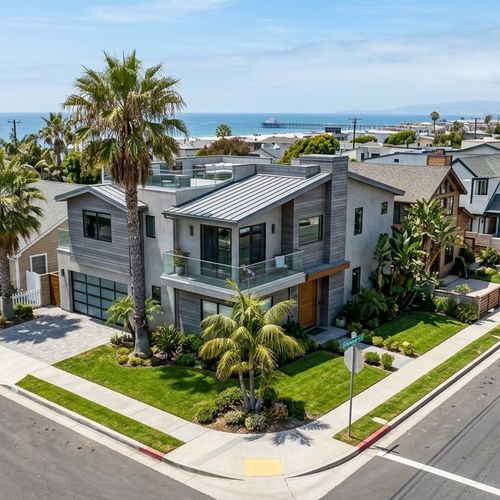


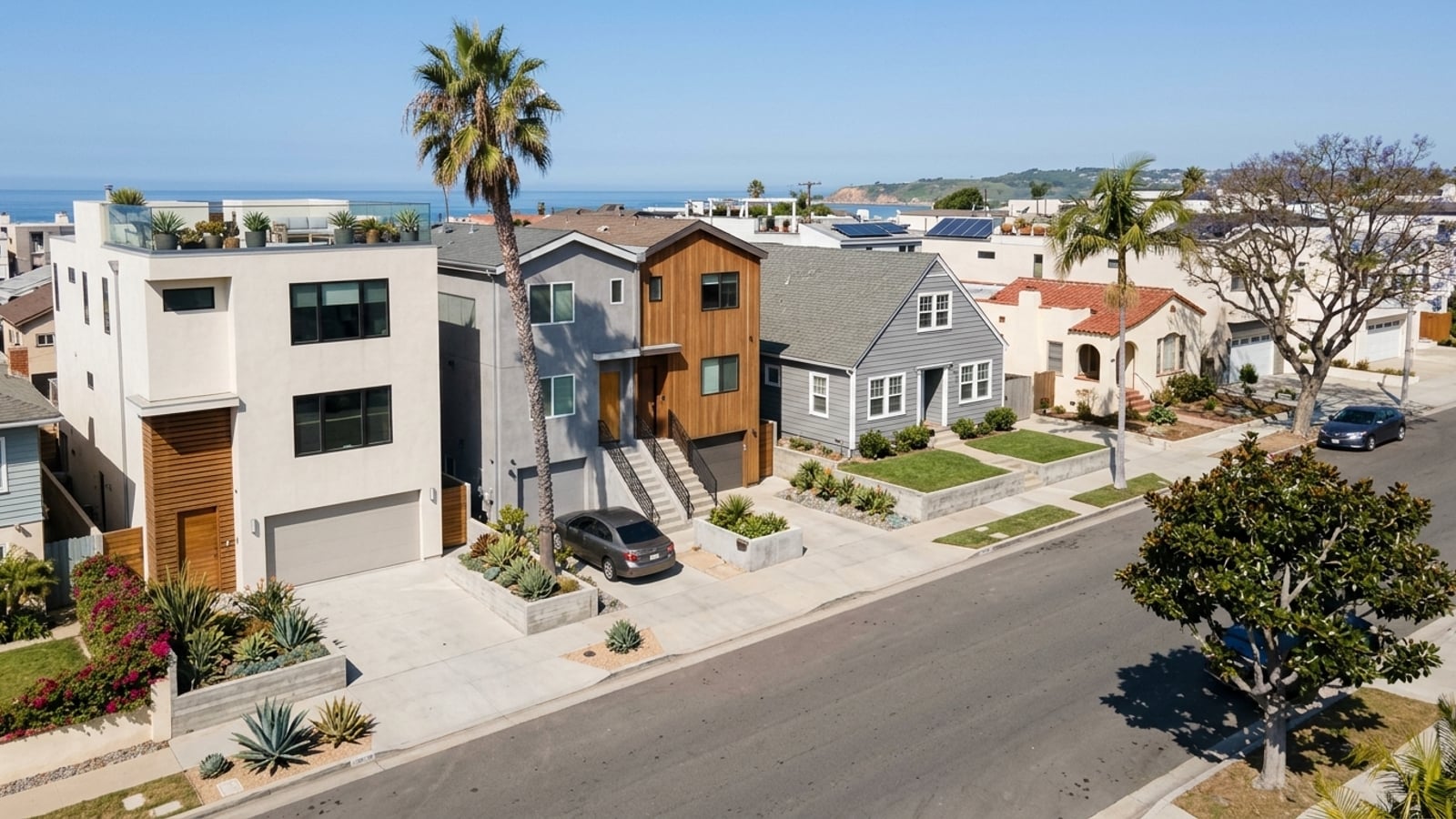
The housing market in Hermosa Beach, CA runs on a limited scale. Bounded by neighboring coastal cities and the Pacific Ocean, this South Bay community sits on a small physical footprint with a relatively stable number of residents. When you're looking at local real estate, the total headcount matters less than the physical constraints of the land itself.
Knowing how many homes exist and how often they change hands sets realistic expectations for your search. The city is fully built out, which means buyers face a fixed supply. Property type and turnover become the primary factors in what you can buy.
Key takeaway
Hermosa Beach is a small, built-out city of about 18,513 residents, so its population barely shifts and the real limit for buyers is how few homes come up for sale. If you want the most space for your money, start with townhouses, which recently sold for about $200 less per square foot than single-family homes. If you need a detached house, expect a higher cost per square foot but a little more room to negotiate on price.
Who this guide is for
You're weighing a move or purchase in Hermosa Beach and want to know what the city's size and density mean for how many homes you'll realistically have to choose from and what kind you can afford.
What is the population of Hermosa Beach, CA?
The city recorded 19,506 residents in the 2010 Census and 19,728 in the 2020 Census. The latest Census Bureau estimate for July 1, 2025, places the population at 18,513. Hermosa Beach is its own incorporated city in Los Angeles County's South Bay, meaning it manages its own municipal services and zoning.
Because Hermosa Beach is built out and its resident count changes little between censuses, a buyer's odds are set by turnover and home type, not headcount. Only 44 homes were in inventory in the 90 days ending September 30, 2026, and townhouses sold for notably less per square foot than single-family homes. Shared walls are the main way to buy more space in this dense city, while detached houses offer a bit more room to negotiate. A city this size has a fixed, small housing stock, and the total population figure has less impact on buyers than how many of those existing homes go up for sale in a given quarter.
Is Hermosa Beach's population growing?
The resident count has stayed relatively flat over the last decade, with a slight dip in the most recent 2025 estimate. As a built-out coastal city, there's very little vacant land left to develop, which naturally caps how many new residents can move in at once.
The city's housing plans reflect this physical limit. Under the 2021-2029 (6th cycle) Housing Element, Hermosa Beach's Regional Housing Needs Assessment allocation is 558 residential units. To meet this, the city's strategy relies partly on the production of accessory dwelling units (ADUs) and junior ADUs, as well as the redevelopment of existing parcels.
Don't expect a wave of new subdivision construction to ease housing supply. Most homes that become available will be resales or rebuilds on existing lots.
Hermosa Beach population density compared with Manhattan Beach
Hermosa Beach covers just 1.43 square miles of land. Based on the 2020 Census, the city fits 13,834.5 people per square mile. Neighboring Manhattan Beach has a population of 35,506 spread across 3.93 square miles, resulting in a different distribution of homes and lots.
That density directly shapes the physical housing stock. The current minimum parcel size in Hermosa Beach's R-1 (Single-Family Residential) Zone is 4,000 square feet. With limited land, homes are often built up rather than out, which is why townhouses are a common way the city accommodates residents. If lot size or a large yard is a priority for you, your budget per square foot of land will be the main constraint, not the structure itself.
Density also means less private outdoor space, close neighbors, and competition for street parking. Check the parking situation, including the garage, driveway, and permit rules, for any specific home before making an offer. Confirm the lot size and how many units are allowed for a specific address with the City of Hermosa Beach Community Development Department.
How many homes are in Hermosa Beach, and how many sell?
The housing supply here is tightly held. The Census Bureau reports a 50.6% owner-occupied housing unit rate for the 2020-2024 period, and when homes do sell, the volume is low. In the 90 days ending September 30, 2026, there were just 54 total home sales across the entire city.
During that same window, 44 homes were in inventory, representing about 2.5 months of supply. That's a tight market, and your shortlist will be brief. Have your financing ready before a suitable home lists so you can move quickly.
With this few sales, any single month's median price can swing based on a handful of transactions. Compare recent street-level sales before making an offer. Citywide medians rest on small samples.
Townhouses vs. single-family homes: what density means for your budget
The price-per-square-foot gap between property types is the clearest result of the city's density. In the 90 days ending September 30, 2026, townhouses sold for a median of $1,049 per square foot based on 14 sales. Single-family homes sold for a median of $1,252 per square foot based on 21 sales. That difference of roughly $200 per square foot means the same budget buys noticeably more interior space in a townhouse.
Detached houses offer more negotiating room, though. Single-family homes closed at a median of 97.9% of list price, while townhouses closed at 99.5%. For a single-family home near the $2,863,858 median, closing 2.1% under asking provides roughly $60,000 of room to negotiate. Townhouses currently offer almost no discount off the asking price.
The townhouse median sale price rose 14.7% year over year and the single-family median rose 4.6% (based on 21 single-family sales), even though the all-homes median fell 2.8%. That overall dip reflects the fact that 19 of the 54 sales were other home types, rather than a drop in single-family or townhouse values. Both figures rest on fewer than 30 sales, so treat them as directional trends.
The downside to townhouses is shared walls and often a homeowners association or shared-ownership agreement. Ask whether a townhouse has an HOA, what the current dues are, and what those dues cover. The downside to single-family homes is paying the highest price per square foot in the city for a relatively small lot.
How to use these numbers in your home search
Your next steps depend on how you prioritize space, budget, and property type. The figures above are medians, not valuations for any particular home, but they help narrow your focus.
- Would shared walls work for you, or do you need a detached house? If shared walls are fine, look at townhouses for a lower price per square foot. If not, expect a higher cost for a single-family home but slightly more room to negotiate.
- Is your budget about total price or about square footage? If it's square footage, the price-per-square-foot gap in the townhouse section matters more than any headline median.
- Can you act within a few weeks of a home listing? The tight inventory shows how thin the supply is, requiring buyers to be ready.
- Do you want a bigger lot than a dense beach city usually offers? Compare the density figures with neighboring areas before narrowing your search to Hermosa alone.
If you need help analyzing the market, Charles Fisher can pull recent sales for a specific street or building type to guide your offer.
Related guides: Where Is.
At a glance
- All homes: median sale price $2,298,905, down 2.8% year over year (90 days ending 2026-09-30, 54 sales)
- All homes: median $1,174 per square foot (90 days ending 2026-09-30)
- All homes: median 46 days on market, 99.2% sale-to-list, 17% sold above list (90 days ending 2026-09-30)
- All homes: 44 homes in inventory, 2.5 months of supply (90 days ending 2026-09-30)
- Single-family homes: median sale price $2,863,858, up 4.6% year over year (90 days ending 2026-09-30; based on 21 sales, so treat as directional)
- Single-family homes: median $1,252 per square foot, 40 median days on market, 97.9% sale-to-list, 14.3% sold above list (90 days ending 2026-09-30; 21 sales)
- Single-family homes: 17 in inventory, 2.5 months of supply (90 days ending 2026-09-30)
- Townhouses: median sale price $2,522,530, up 14.7% year over year (90 days ending 2026-09-30; based on 14 sales, so treat as directional)
- Townhouses: median $1,049 per square foot, 37 median days on market, 99.5% sale-to-list, 14.2% sold above list (90 days ending 2026-09-30; 14 sales)
- Townhouses: 11 in inventory, 2.3 months of supply (90 days ending 2026-09-30)
Hermosa Beach population FAQs
Is Hermosa Beach in LA County or Orange County?
Hermosa Beach is in Los Angeles County, California. It's its own incorporated city in the South Bay, not a suburb or neighborhood of the City of Los Angeles. Its official date of incorporation is January 14, 1907, and it uses the 90254 ZIP code.
Is Hermosa Beach expensive to live in?
Yes, housing costs are high. In the 90 days ending September 30, 2026, the all-homes median sale price was $2,298,905, based on 54 sales. The median price per square foot across all home types was $1,174.
How close is Hermosa Beach to Manhattan Beach, and can you walk between them?
The two cities share a border. It's approximately 2 miles one-way along The Strand between the Hermosa Beach Pier and the Manhattan Beach Pier, which translates to roughly a 35-to-40-minute walk.
How does Hermosa Beach compare with Redondo Beach?
Redondo Beach is larger in both land and headcount. The 2020 Census recorded a population of 71,576 in Redondo Beach across 6.20 square miles, compared to Hermosa Beach's 19,728 residents on 1.43 square miles. Because Redondo is larger, buyers generally have more homes to choose from, though you should check current home prices in each city to compare costs.
What is it like living in Hermosa Beach?
Living here means residing in a compact beach city centered on the Hermosa Beach Pier, which is 1,228 feet long and offers year-round fishing. The beach and Strand area were historically intended to be held in perpetuity as a beach playground free from commerce. Density is high, meaning most homes are close to neighbors and amenities.
Is Hermosa Beach safe?
For safety questions, review the official crime data for the period and area you care about rather than relying on any summary. You can check Hermosa Beach crime statistics through the California DOJ OpenJustice portal or the Hermosa Beach Police Department. Per-resident crime rates divide incidents by the resident count, so a city that draws many visitors can show rates that don't reflect residents alone.
Are dogs allowed on Hermosa Beach?
No, dogs are prohibited on the sand beach at all times, except for service animals. On The Strand, pets are allowed but must be on a leash not exceeding six feet at all times, and owners must pick up after them. Dogs are also banned on the Pier, at Sea View Parkette, and at Fort Lots-o-Fun Park. Confirm current rules with the city, as regulations can change.
Can you rent out a home short-term in Hermosa Beach?
It depends on the location. As of the city's most recent ordinance, short-term rentals are permitted within the city's Coastal Zone but remain prohibited everywhere else in the city. Owners operating in the Coastal Zone must register with the city, obtain a business license, collect transient occupancy tax, and meet safety requirements. Confirm current short-term rental rules with the City of Hermosa Beach before buying with rental income in mind.
Sources
- Redfin: Data Center
- Census Bureau: Hermosa Beach QuickFacts
- Census Bureau: Hermosa Beach QuickFacts (V2025)
- City of Hermosa Beach: Housing Element Update
- Census Bureau: Redondo Beach QuickFacts
- California Coastal Commission: Hermosa Beach R-1 Zone
- City of Hermosa Beach: City Facts
- Rome2Rio: Hermosa Beach to Manhattan Beach Pier
- City of Hermosa Beach: Beach, Strand and Pier Regulations
- City of Hermosa Beach: Short-Term Rentals
Check out this article next