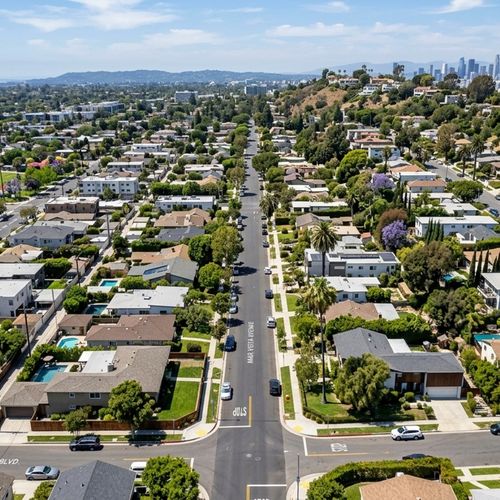


The Sand Section is the westernmost slice of Manhattan Beach, CA - right up against the Pacific Ocean. It is often considered one of the best neighborhoods in Manhattan Beach for its immediate coastal access. The Strand, the paved walking and biking path that runs the full length of the neighborhood's western boundary, is what most people picture when they think of this area.
If you're looking at homes for sale in Sand Section Manhattan Beach, you're looking at a dense coastal layout where properties sit close to the shoreline and the commercial strips. The downtown district falls within these boundaries, which means you can walk to the city's main dining and retail corridors from most addresses here.
Real Estate and Home Prices in the Sand Section
Property values in the Sand Section run higher than the broader Manhattan Beach median. Recent market data puts the citywide median sale price at around $3,490,000, with homes averaging roughly 40 days on the market.
Within the Sand Section itself, median home prices typically range from $3.3 million to $5.7 million, depending on the reporting period and how close to the water a property sits. Citywide inventory tends to hover around 74 active listings, so supply stays tight.
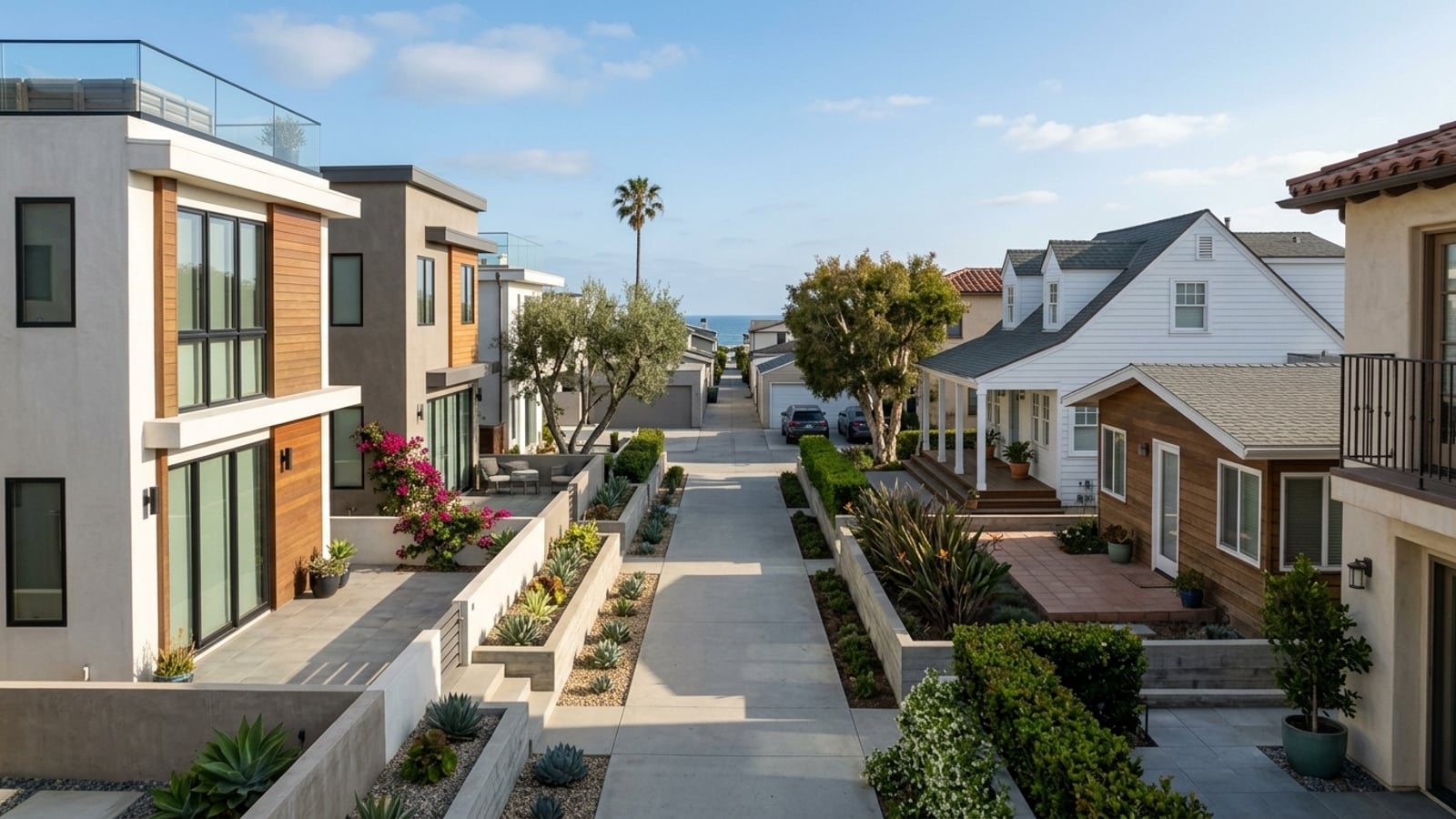
Ocean-view properties and lots on the neighborhood's walk streets draw the most competition. Those walk streets - pedestrian-only pathways that replace traditional roads in front of certain homes - change how you access your garage and front door, which is worth understanding before you go deep on any offer.
Home Types and Property Attributes
The housing stock runs from original single-story beach cottages to large, multi-story modern builds. Lot sizes here are smaller than what you'd find further inland, so builders tend to go up rather than out.
Rooftop decks and large balconies are common - designed specifically to pull in ocean views and coastal breezes. On the walk streets, garages are accessed from rear alleys, which keeps cars out of the pedestrian-facing frontage entirely.
New Construction vs. Established Homes
Redevelopment is steady throughout the neighborhood. Older structures come down regularly, replaced by custom new construction that pushes the allowable building envelope and leans into modern coastal architecture.
Mid-20th century homes still exist, though most have been renovated more than once by now. If you're buying an older property and thinking about expanding the footprint or adding a level, pull the local zoning codes early - before you're emotionally attached to a floor plan that may not pencil out.
Daily Life, Dining, and Getting Around
The Manhattan Beach Pier anchors this neighborhood in a way no other landmark does. It's a 928-foot concrete structure built in 1920, listed as a California State Historical Landmark in 1995, and it sits at the end of Manhattan Beach Boulevard - home to the Roundhouse Aquarium and the Volleyball Walk of Fame. If you live here, you'll walk past it more times than you can count.
Highland Avenue runs north-south as the main thoroughfare through the El Porto area and acts as a dividing line on that side of the neighborhood, while Manhattan Avenue carries most of the commercial street traffic. On the eastern edge, Veterans Parkway and Valley Drive give you north-south options away from the beachfront. And The Strand handles the pedestrian and bike flow directly along the sand, running uninterrupted along the coast.
Restaurants and Local Dining
The downtown concentration of restaurants is genuinely one of this neighborhood's draws. The Strand House, Manhattan Beach Post (MB Post), The Arthur J, and Fishing With Dynamite are among the well-reviewed spots just steps from the sand.
Mangiamo, Nick's Manhattan Beach, Simmzy's, and The Rockefeller round out the cluster. For everyday meals, residents also rely on Esperanza Cocina de la Playa, SLAY Italian Kitchen, and Uncle Bill's Pancake House.
Commuting and Walkability
The grid layout means most daily errands - coffee, dinner, the beach - don't require a car. Sidewalks and pedestrian paths connect the residential blocks directly to the downtown commercial center.
For longer commutes, Manhattan Beach Boulevard and other east-west streets get you to the Pacific Coast Highway (Highway 1) and Interstate 405. Highland Avenue and Manhattan Avenue slow down on summer weekends when beach attendance peaks, so factor that in if timing matters to your commute.
Schools and Local Climate
The Sand Section sits in a classic Southern California coastal climate. Temperatures stay mild year-round - you won't get the summer heat that hits areas further inland.
The marine layer is part of daily life here. Morning clouds and fog roll in regularly, usually burning off by afternoon. It keeps the daily highs comfortable even in the warmest months, which is either a feature or a quirk depending on how much you like morning sun.
One practical note: buyers should verify exact property lines when registering for local districts, since boundaries can shift.
Local School District Zoning
The neighborhood is served by the Manhattan Beach Unified School District. Children in the Sand Section and the adjacent El Porto area are generally zoned for Grand View Elementary, with secondary students typically feeding into Mira Costa High School.
Check the district's official boundary maps before you close. Attendance zones are worth confirming rather than assuming.
Buying a Home in the Sand Section
With citywide inventory recently sitting at just 74 available homes and roughly 106 homes sold across the city in a recent period, this market moves. You don't have the luxury of slow decision-making.
The average sale-to-list price ratio citywide is near 99.6% - meaning most homes sell very close to asking. About 26% sell above the list price, so well-priced listings still attract multiple offers. A local agent who tracks off-market activity and understands the pricing difference between walk streets and standard lots is worth the effort to find before you need one.
Reviewing Property Disclosures
Salt air and moisture do real work on coastal properties over time. Review inspection reports carefully for exterior weathering and roof condition - these aren't abstract concerns at this price point.
Street parking in the dense downtown grid is limited, so confirm the exact number of deeded parking spaces during due diligence. It's a standard step, but one that matters more here than in less dense neighborhoods.
Frequently Asked Questions
What is Sand Section in Manhattan Beach known for?
The Sand Section is known for its oceanfront location, walk-street homes, and the 928-foot Manhattan Beach Pier. The neighborhood features The Strand, a paved path running directly along the beach for pedestrians and cyclists.
What are homes like in Sand Section Manhattan Beach, and what do they cost?
Homes range from original beach cottages to multi-story modern builds, many on pedestrian-only walk streets. Prices typically run from $3.3 million to $5.7 million, which sits above the citywide median of approximately $3.49 million.
What restaurants and dining are in Sand Section Manhattan Beach?
The downtown area has dozens of restaurants close to the beach. Popular spots include The Strand House, MB Post, Fishing With Dynamite, The Arthur J, and Uncle Bill's Pancake House.
What is the weather like in Sand Section Manhattan Beach?
The climate is mild year-round. Mornings often bring a marine layer of clouds and fog that typically clears by afternoon, keeping temperatures cooler than inland areas.
How does real estate in the Sand Section compare to the Tree Section or Hill Section?
The Sand Section offers immediate beach access and a denser, more walkable grid than other neighborhoods in the city. The ocean proximity and walk streets push home prices above the broader Manhattan Beach median.
Where can buyers find larger lot sizes away from the beach?
Because the coastal grid is dense, builders in the Sand Section typically build up rather than out. Buyers looking for more land often shift their search to the Manhattan Beach Tree Section, where properties sit further inland on larger footprints.
Does the Hill Section have the same walk-street layout as the coast?
The pedestrian-only walk streets are a unique feature of the immediate shoreline, changing how residents access their front doors and garages. Properties in the Manhattan Beach Hill Section rely on traditional roads and offer a less dense environment than the coastal grid.
Check out this article next