

The median price for anyone buying a home in Manhattan Beach, CA is currently around $3.89 million - which tells you pretty quickly what kind of market you're dealing with. Homes are moving in roughly 28 days on average, and inventory stays tight enough that hesitation is rarely rewarded.
What makes this city interesting, though, is how much variety exists within that premium price point. From oceanfront properties near the 928-foot Manhattan Beach Pier to larger lots east of Sepulveda Boulevard, the housing stock shifts significantly depending on where you look. This guide walks through each of the city's official MLS areas - the home types, the typical prices, and what daily life actually looks like on the ground.
Overview of Manhattan Beach Neighborhoods
Manhattan Beach is formally divided into five distinct real estate sections recognized by the local Multiple Listing Service (MLS): the Sand Section, the Hill Section, the Tree Section, East Manhattan Beach, and Manhattan Village. Each one has a different character, a different price floor, and a different relationship to the water.
That last point matters more than most buyers expect before they start looking.
How the City is Organized
The city's geography splits cleanly along Sepulveda Boulevard, which runs north to south. The Sand, Hill, and Tree sections sit west of that line, closer to the Pacific Ocean. East Manhattan Beach and Manhattan Village are on the east side, with slightly different property configurations and generally larger lots.
Local zoning shapes what gets built in each area. The western sections carry strict height limits and smaller lot sizes - the trade-off for ocean proximity and density. Head east, and you'll find more land, wider setbacks, and homes that sprawl rather than stack.
Manhattan Beach Within the Greater LA Area
Manhattan Beach, CA, sits within the Los Angeles-Long Beach-Anaheim Metropolitan Statistical Area, home to roughly 13 million people. It's part of Los Angeles County and functions as a coastal anchor in the South Bay region.
For commuters, the practical upside is direct access to major employment hubs via Interstate 405 and Pacific Coast Highway - routes that connect the city to downtown Los Angeles, El Segundo, and surrounding business districts.
Mapping the Local Real Estate Zones
Once you understand that ocean proximity drives the pricing premium here, the map starts to make sense. The local MLS organizes listings into areas 142 through 147, grouping homes by geographic and structural characteristics - and most real estate portals and local brokerages use those exact boundaries.
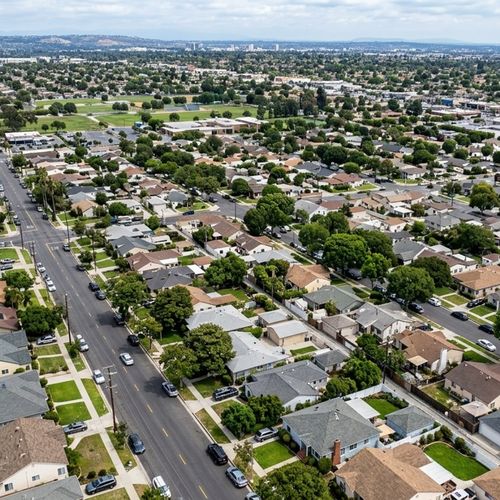
Looking at a map of Manhattan Beach, CA, neighborhoods, you'll see a clear progression: high-density coastal living in the west, more traditional suburban layouts as you move east.
Interactive Neighborhood Map Details
The city's topography isn't subtle. The Hill Section involves real elevation changes, and the Sand Section runs on a strict grid. Both of those physical features show up in property values - elevation tends to determine view quality, and view quality determines a significant portion of what a home is worth here.
Zoning maps can also show you property lines and public beach access points, along with the exact distance from any given address to the Manhattan Beach Pier or the downtown commercial district. Worth pulling up before you tour.
Area Breakdown by Region
The western half of the city is dominated by the Sand Section (MLS Area 142), the Tree Section (Area 143), and the Hill Section (Area 144). These neighborhoods carry the highest price per square foot, driven by proximity to the water and to downtown dining.
East of Sepulveda, you'll find East Manhattan Beach (Areas 146 and 147) and Manhattan Village (Area 145). More land for the price, wider streets, mature landscaping - a different trade-off, but a legitimate one depending on what you're after.
Manhattan Beach Neighborhoods by Home Type and Price
At any given time, there are roughly 95 active listings across the city. Recent data puts the average sale-to-list ratio at 100.08%, meaning homes are selling slightly above asking - not a market where lowball offers tend to go anywhere.
Your search strategy should match the property type you're actually looking for, because condominiums and townhomes are concentrated in specific zones while large detached homes dominate others.
Detached Single-Family Homes
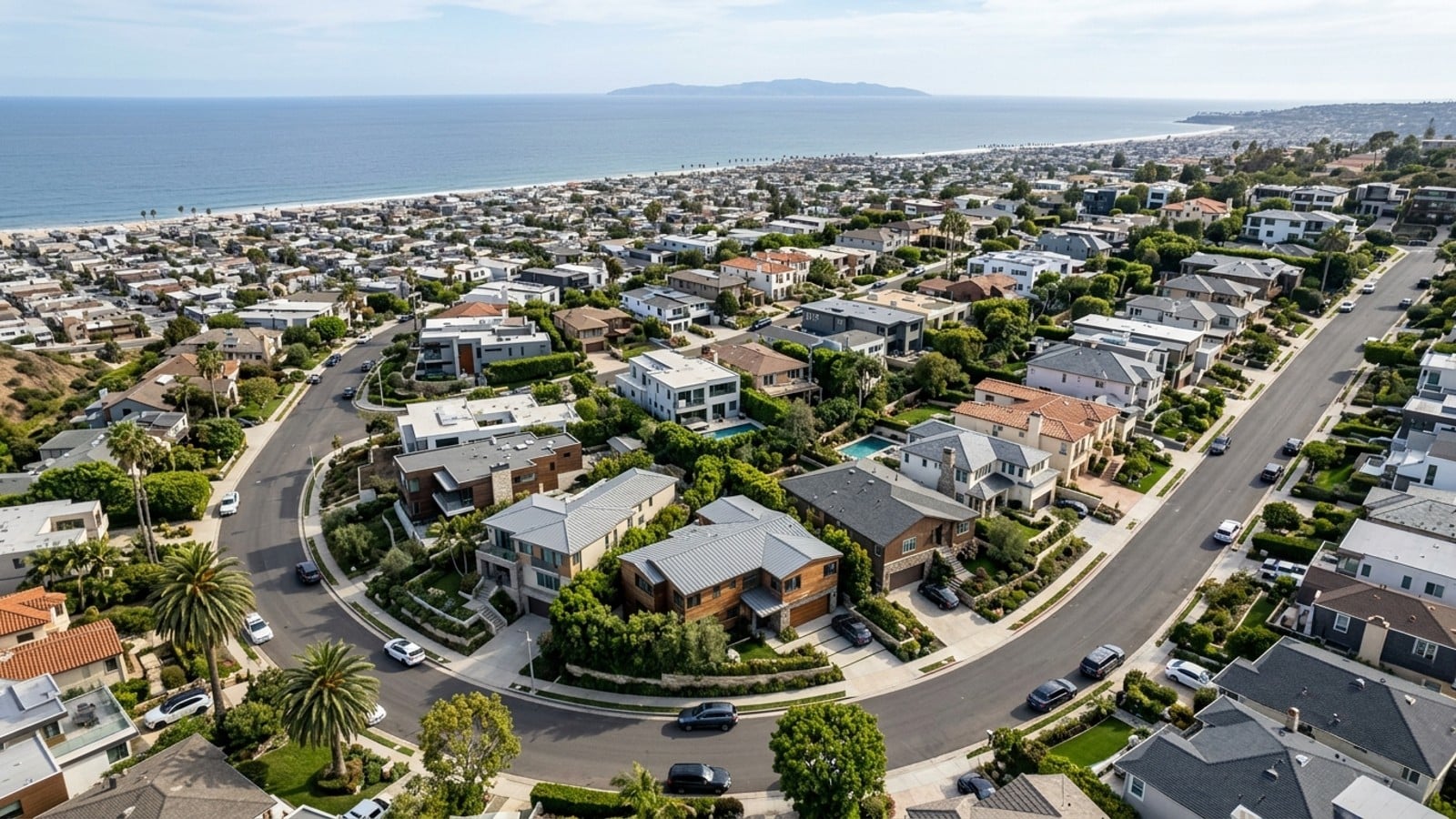
Detached single-family homes exist in all five sections, but the architecture shifts considerably by zone. The Tree Section and East Manhattan Beach lean toward traditional coastal craftsmen, modern farmhouse designs, and mid-century ranch homes. The Hill Section is where you'll find custom-built luxury estates on oversized, sloped lots - many with reverse floor plans that put the main living areas on the top floor to maximize sightlines toward Catalina Island.
Condos and Attached Homes
Attached housing is relatively limited in Manhattan Beach, and most of it clusters along the coastline. The Sand Section holds the bulk of the city's duplexes, townhomes, and low-rise condominium complexes - a number of them along The Strand, the paved path that runs parallel to the beach.
These properties trade yard space for panoramic water views and zero-lot-line living with direct beach access. Whether that's the right trade depends entirely on how you plan to use the home.
Master-Planned Communities
Manhattan Village is the city's only large-scale, master-planned community. Developed in the 1980s, it includes a mix of estate homes, townhomes, and court homes within a gated environment - private streets, community pools, and a homeowners association that handles exterior maintenance for certain property types. It sits adjacent to the Manhattan Village shopping center and a local golf course.
Detailed Neighborhood Profiles
The citywide median sale price hovers around $3.89 million, but that number masks a wide spread. What you pay in the Sand Section and what you pay in Manhattan Village can look like two entirely different markets. Here's what each area actually delivers.
The Sand Section (MLS Area 142)
The Sand Section covers the coastal edge of the city, including Downtown and The Strand. Lots are small, homes are dense and multi-story, and the mix runs from modern detached homes to luxury townhomes. Properties here routinely sell well above the citywide median - especially anything with unobstructed ocean views.
The payoff is immediate walkable access to the Manhattan Beach Pier and the downtown commercial corridors. You're not driving to the beach; you're walking out the door.
The Tree Section (MLS Area 143)
The Tree Section is the largest suburban area west of Sepulveda Boulevard. It's named for its tree-lined streets, many of which are named after tree species, and the housing stock is exclusively detached single-family homes on moderately sized lots.
Prices generally align with or slightly exceed the city median. It's a traditional neighborhood layout with real streets and mature landscaping, close enough to the coast to matter but without the density of the Sand Section.
The Hill Section (MLS Area 144)
The Hill Section is the smallest of the five areas and also among the most expensive real estate in Los Angeles County. The elevated topography is the whole point - lots are larger than in the Sand or Tree sections, and the homes that sit on them are substantial, custom-built estates with sweeping ocean and city light views, private pools, and multi-car garages.
It sits just south of the Tree Section and east of the Sand Section. If you want the views without the Sand Section's density, this is where buyers tend to land.
East Manhattan Beach (MLS Areas 146/147)
East Manhattan Beach spans the area east of Sepulveda Boulevard and offers the largest standard lot sizes in the city. The housing stock ranges from older single-story ranch homes to large-scale new custom builds - and while this area represents a more accessible entry point compared to the coastal sections, new construction here regularly pushes past the $3.89 million median.
Wider streets, proximity to the city's eastern borders, and a quieter suburban feel. A different kind of Manhattan Beach, but a real one.
Manhattan Village (MLS Area 145)
Manhattan Village occupies the northeast corner of the city. It's a private, planned community with 24-hour security gates, a mix of attached townhomes and detached single-family residences, and an HOA that manages private streets and community pools.
Townhomes here offer some of the lowest entry prices in Manhattan Beach. If budget is a constraint and you're not fixed on being west of Sepulveda, this is where the math starts working in your favor.
Cost of Living and the Housing Market
Homes sell in roughly 28 days on average, and inventory sits at about 2.7 months of supply as of mid-2026. That's not a lot of runway to make decisions. Beyond the purchase price, you're also budgeting for property taxes, insurance, and local utilities - carrying costs that add up fast on multi-million-dollar properties.
Median Home Prices and Market Trends
The median sale price in Manhattan Beach is $3,897,879. About 34.6% of recent sales closed above asking price, which tells you demand hasn't softened. The spread within that median is wide - a townhome in Manhattan Village can price significantly below it, while a custom build on The Strand can exceed eight figures.
Know which end of that range you're shopping in before you start making offers.
Researching Local Crime Data
The Manhattan Beach Police Department publishes weekly and monthly crime summaries directly on the city website. The department also maintains a Calls for Service Dashboard that maps activity - property crime, traffic incidents, alarms - and updates every 15 minutes. Third-party options include the LA County Sheriff's Crime Map portal and SpotCrime.
Manhattan Beach School Districts
Public schools here fall under the Manhattan Beach Unified School District (MBUSD), headquartered at 325 South Peck Ave, serving roughly 5,900 students. The district runs one preschool, five elementary schools, Manhattan Beach Middle School, and Mira Costa High School.
Attendance boundaries are set by home address. Official zoning maps are on the district's website, and you should verify which school a specific property is zoned for before you buy - don't rely on assumptions based on general location.
Finding a Home in Manhattan Beach
With roughly 95 homes on the market at any given time, you're not browsing a deep inventory. Getting clear on which of the five MLS areas fits your budget and lifestyle isn't a preliminary step - it's the whole strategy.
Whether you're looking at a coastal townhome or an inland estate, having someone local who can get you in front of a property the day it lists makes a genuine difference in this market.
Tracking Homes for Sale by Area
Set up MLS alerts filtered by the specific area codes - 142 through 147 - so you're only seeing homes in the sections you actually want. Given that roughly 107 homes sold in the most recent tracking period, new inventory does appear regularly. The issue isn't availability; it's response time.
Renting vs. Buying
Some buyers choose to rent in Manhattan Beach first - a reasonable way to test whether the density of the Sand Section actually suits you, or whether the suburban layout of East Manhattan Beach is a better fit for daily life. Rental inventory tends to concentrate in attached units near the coast and single-family homes in the eastern sections.
The monthly rental costs are high. That's the honest part of the calculation to weigh against the long-term equity of buying.
Frequently Asked Questions
What is the difference between living in the Sand Section versus the Tree Section in Manhattan Beach?
The Sand Section has dense, multi-story homes on smaller lots with immediate walkable access to the beach and the Manhattan Beach Pier. The Tree Section sits further inland with traditional detached single-family homes on moderately sized lots and mature landscaping - quieter, more suburban, still west of Sepulveda.
Which area of Manhattan Beach, CA, is the most affordable for homebuyers?
Manhattan Village and East Manhattan Beach generally offer the most accessible entry points relative to the $3.89 million citywide median. Manhattan Village in particular has attached townhomes that frequently price below detached properties in the coastal sections.
Which Manhattan Beach neighborhood is best for families wanting walkable access to local schools?
Every address in the city falls within the Manhattan Beach Unified School District, which runs five elementary schools spread throughout the area. That said, you should pull the official MBUSD attendance maps and confirm which specific school a property is zoned for before you buy - that's not something to leave to guesswork.
Are there parking and noise issues to consider before buying a home in the Sand Section?
Yes. The Sand Section deals with higher traffic and limited street parking because of its proximity to the beach and the downtown commercial district. Homes here tend to maximize lot coverage, so driveways and garages can be tighter than what you'd find in East Manhattan Beach.
Is Manhattan Village the only gated community with an HOA in Manhattan Beach?
Yes - Manhattan Village is the city's only large-scale, master-planned community with 24-hour security gates. The HOA handles private streets, community pools, and exterior maintenance for certain attached properties.
Which neighborhood in Manhattan Beach offers the easiest commute to LAX and downtown Los Angeles?
East Manhattan Beach and Manhattan Village have the fastest access to Interstate 405 and other major commuter routes. Both sit along the Sepulveda Boulevard corridor, which cuts down the time spent threading through local city traffic before you reach the freeway.
Check out this article next