


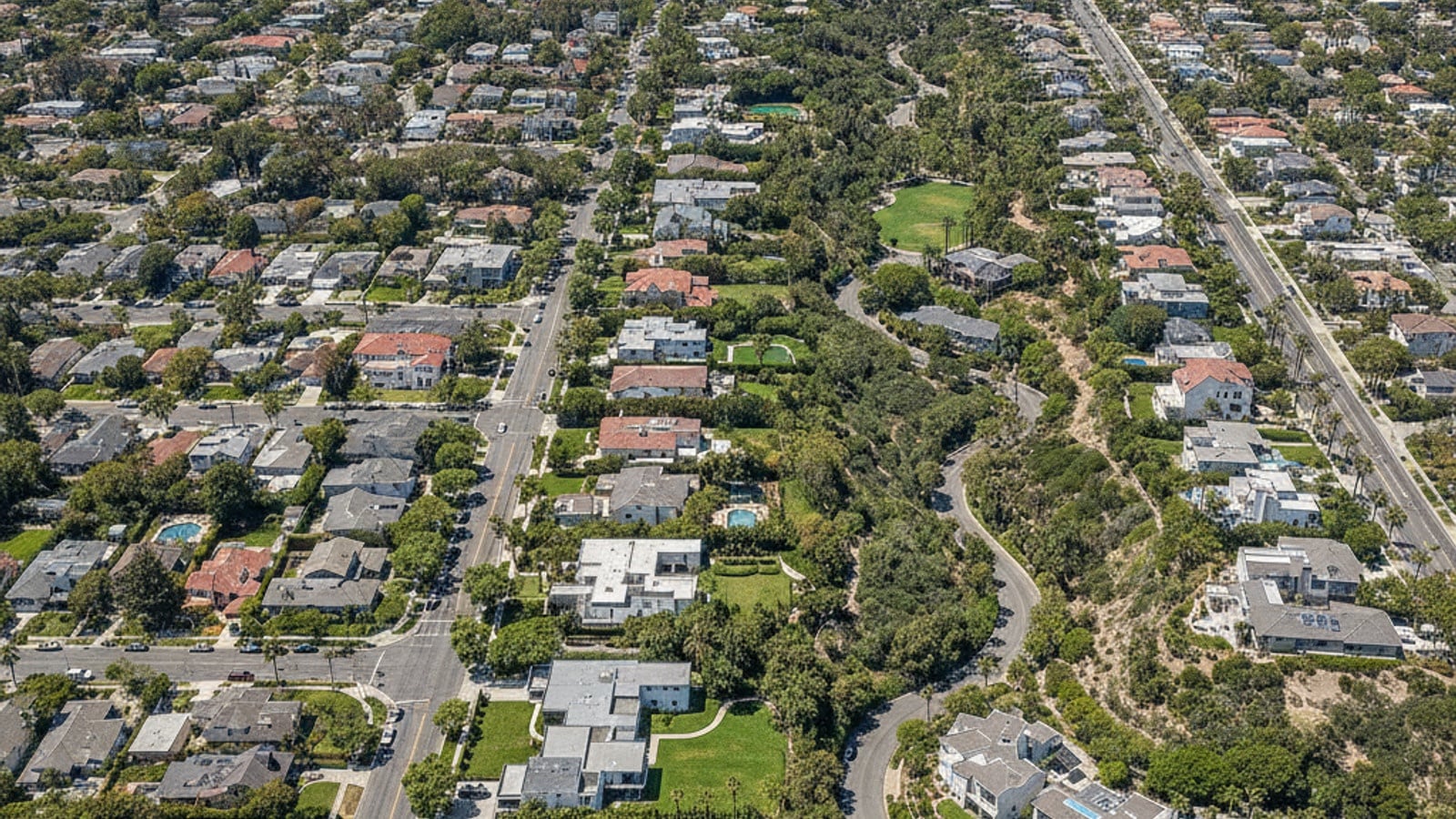
El Segundo sits directly south of Los Angeles International Airport, offering a distinct coastal environment within the broader South Bay region. The city spans just over five square miles, bordered by the Pacific Ocean to the west and the 105 and 405 freeways to the north and east. This geographic pocket creates a self-contained community feel while maintaining direct access to the rest of Los Angeles County.
Buyers looking at the best neighborhoods in El Segundo, CA typically prioritize the area's shorter commute times and established public amenities. Real estate options range from historic bungalows near the commercial center to large coastal estates on elevated lots. Understanding how these residential zones differ helps narrow down a property search effectively.
Why Buyers Choose El Segundo
The average commute time for residents here is approximately 19 minutes, well below the Los Angeles County average. Drivers use the nearby 105 and 405 freeways to reach major employment hubs across the region. Those working in downtown Los Angeles or neighboring beach cities often use the Metro C Line, which runs along the city's eastern edge.
The city maintains a suburban feel despite its closeness to heavy commercial infrastructure. LAX borders the northern edge, making the area convenient for frequent travelers and airline employees. The local street grid keeps residential traffic separate from the main industrial corridors, allowing the residential blocks to remain relatively quiet.
Where to Look for Homes in the City
El Segundo divides its residential zoning primarily into the western and central portions of the city, away from the eastern commercial sectors. Buyers will find a mix of single-family homes, townhouses, and low-rise apartment buildings scattered across these zones. The local topography and distance to the coastline dictate much of the property pricing and lot sizes.
Lot sizes generally expand as you move away from the central downtown corridor. Zoning rules limit building heights in most residential areas, preserving the low-density feel of the streetscapes. Buyers should review specific neighborhood boundaries, as street parking rules and access to specific parks change depending on the exact location.
Downtown El Segundo
The area surrounding Main Street contains a dense mix of apartments, condos, and older single-family homes. Residents living here are within walking distance of local restaurants, independent shops, and Library Park. The properties often feature smaller lot sizes and classic architectural styles, including mid-century and Spanish Colonial designs.
Parking can be tighter in this central zone compared to the outer residential streets. Buyers prioritizing walkability over large yard space often focus their search within these few central blocks.
The Hill
The Hill takes its name from its elevated geography, sitting higher than the central commercial district. This neighborhood consists almost entirely of single-family homes on larger residential lots. The elevation provides some properties with views of the surrounding South Bay or the Pacific Ocean.
Streets in The Hill are wider and purely residential, offering a different environment than the denser downtown blocks. Homebuyers looking for extensive outdoor space or room for property expansions frequently target this area.
Sycamore Canyon
Sycamore Canyon sits near the southern edge of the city, blending older homes with newer, large-scale construction. The neighborhood provides direct access to Recreation Park, which serves as a primary outdoor facility for local residents. The streets here wind around the natural topography, breaking away from the standard grid pattern found elsewhere.
The short distance to El Segundo High School and Center Street School makes the area a common target for buyers prioritizing short morning drop-offs. Properties in Sycamore Canyon often carry premium price tags due to the larger lot dimensions and mature landscaping.
Smoky Hollow
Smoky Hollow historically served as an industrial zone but has transitioned into a mixed-use district over recent years. The area now houses local breweries, tech startups, and creative office spaces alongside alternative residential properties. Buyers looking for industrial lofts or converted spaces will find their best options in this pocket.
The residential footprint remains small compared to the commercial presence. Living in Smoky Hollow places residents directly next to the city's expanding creative economy, though traditional single-family homes are rare here.
West El Segundo
West El Segundo contains the residential streets closest to the Pacific Ocean. Residents here are a short distance from El Segundo Beach and the northern stretch of Dockweiler Beach. The ocean breeze and coastal access drive consistent demand for these properties.
Homes in this western pocket range from updated mid-century properties to newly built coastal modern estates. Inventory tends to be limited, as owners in the westernmost blocks rarely sell.
Current Home Prices and Market Trends
As of mid-2026, median home values in El Segundo range from $1,700,000 to $2,100,000, depending on the specific neighborhood. The average price for a detached single-family home sits at approximately $2,200,000. Condominiums and townhomes offer a lower entry point, typically pricing between $800,000 and $1,300,000.
Renting an apartment near downtown or the eastern commercial edge costs an average of $2,800 to $3,500 per month for a two-bedroom unit. Buyers entering the 2026 market will notice that properties priced under the $2,000,000 mark receive multiple offers within the first two weeks of listing. Buyers should secure pre-approval before touring homes in this competitive price bracket.
Public Schools and Outdoor Spaces
The El Segundo Unified School District serves the entire residential population within the city limits. The district boundaries align almost exactly with the city borders, meaning any property purchased within El Segundo falls under its jurisdiction. This unified system simplifies the home search for buyers who want certainty about school assignments.
The city maintains several large outdoor spaces and commercial centers that serve as community hubs. Residents have access to a mix of traditional parks and modern shopping plazas.
Recreation Park: Located centrally, this facility includes sports fields, tennis courts, and open green space.
Library Park: Situated downtown, this smaller park hosts community events and provides a quiet green space near Main Street.
The Point: A major outdoor shopping and dining center on the eastern edge of the city, offering retail stores and restaurants.
El Segundo Beach: The local stretch of coastline featuring a paved bike path that connects to neighboring South Bay beaches.
Buyers should note that access to the beach requires crossing Pacific Coast Highway. Most residents use the designated pedestrian bridges or bike paths to reach the sand safely.
Frequently Asked Questions
Where should I live if I work in El Segundo?
If your office is in the eastern commercial sector near the 405, living in Downtown El Segundo or Smoky Hollow provides the shortest commute. Residents in these areas can often bike or walk to the nearby tech and aerospace campuses. Buyers prioritizing a traditional residential street over proximity to the office usually prefer The Hill or Sycamore Canyon.
What is the cost of living in El Segundo compared to other South Bay cities?
El Segundo generally offers lower housing costs than neighboring Manhattan Beach, where median prices easily exceed $3,000,000. However, it remains more expensive than inland cities like Hawthorne or Lawndale. The local property taxes and utility rates align closely with the rest of Los Angeles County.
Check out this article next