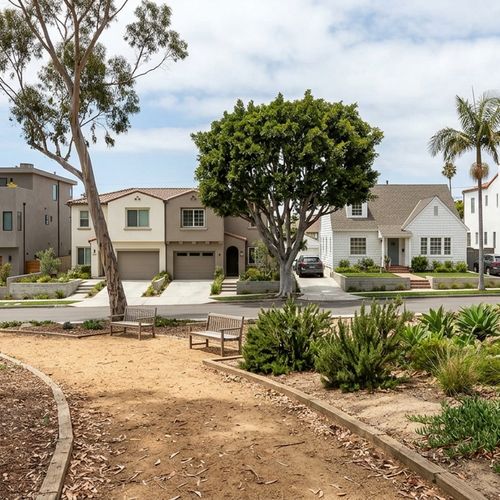


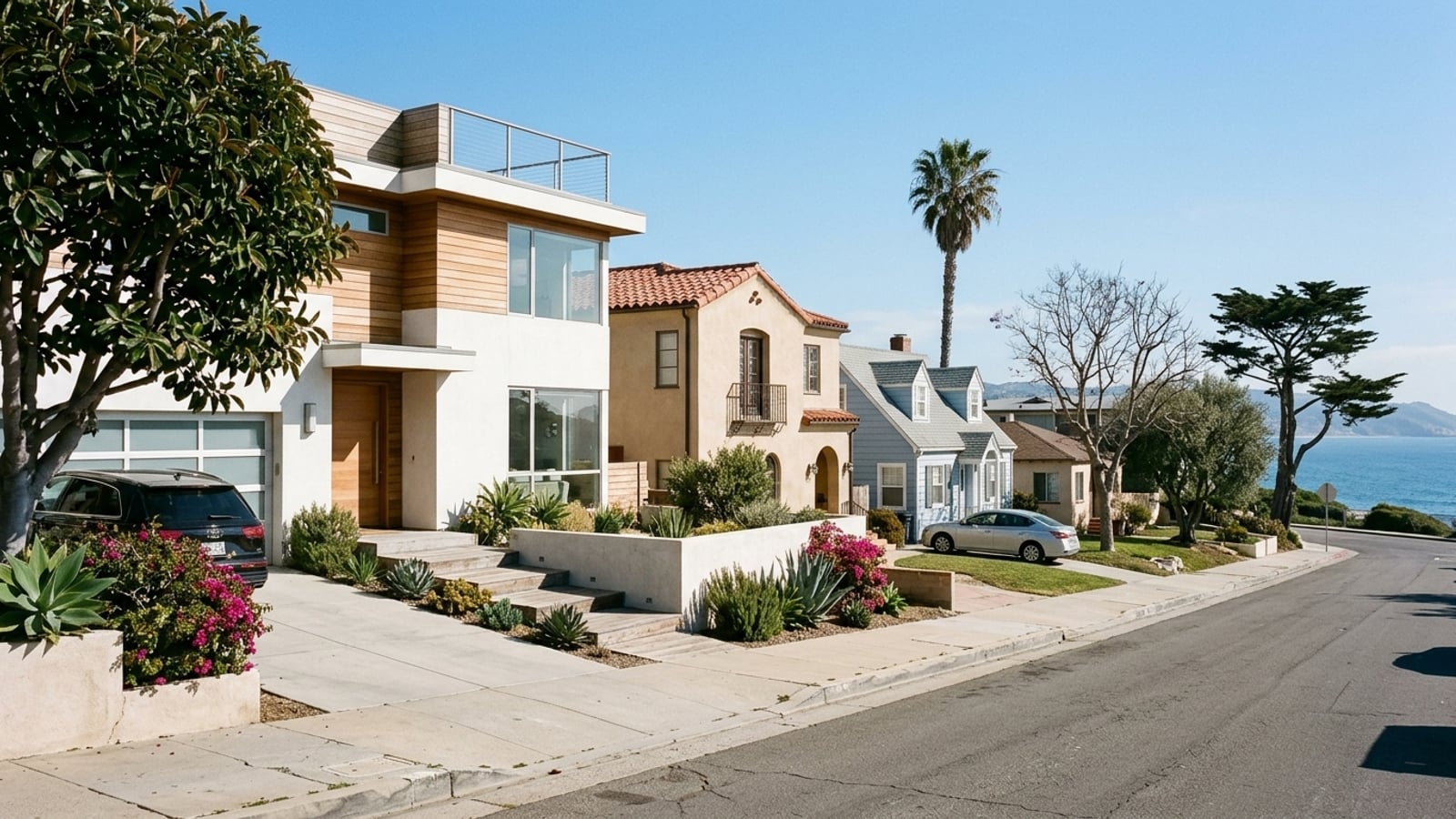
Hermosa Beach, CA, has a mild coastal climate, but the daily conditions vary depending on where a house sits. From the immediate beachfront to the higher elevations on the eastern side of town, local microclimates shape temperatures, sunlight, and home maintenance in ways that don't show up on any regional forecast.
Local geography matters more than the calendar. Fog, sun, salt air, and winter storms affect different blocks in ways that should shape which property you choose and how you budget for upkeep.
Key takeaway
Hermosa Beach has a mild coastal climate, and the biggest difference you'll feel comes from your distance from the ocean. Homes near the sand get cooler summers and more morning fog, and they need more salt-air upkeep. Higher ground in East Hermosa and Hermosa Hills tends to get more afternoon sun. With homes taking a median 46 days to sell, you usually have time to visit a shortlisted house on a gray June morning and a warm afternoon before you offer.
Who this guide is for
You're weighing a home in Hermosa Beach and want to know how fog, sun, salt air, and winter storms should shape which part of town and which house you choose.
Hermosa Beach weather patterns by season
How far a home sits from the sand matters more than what month it is. Blocks nearest the beach get more marine-layer fog, cooler summers, and more salt air, while the higher ground to the east gets more sun and warmer afternoons.
With homes taking that median time to sell, you have time to check both conditions on any house you shortlist.
Late spring and summer weather in Hermosa Beach
The famous "May Gray" and "June Gloom" happen when warm air moves over the cold ocean, cooling and condensing into low stratus clouds and fog. This marine layer is held in place along the coast by a temperature inversion. The clouds typically burn off by midday as the sun heats the surface, though strong upper-level high pressure can keep gray skies confined to the coast much longer.
A house toured at 2 p.m. in July shows different light and warmth than it will at 8 a.m. in June. Schedule a morning visit to see the property under cloud cover. On the blocks nearest the sand, some early-summer days stay gray all day, which affects how bright the home feels, how fast things dry, and how much a rooftop solar system produces in those months.
Fall and winter weather in Hermosa Beach
Fall brings some of the clearest days to the coast, often driven by offshore Santa Ana winds. The National Weather Service notes these dry, east-to-west winds happen when high pressure over the desert Southwest flows toward low pressure off the California coast, most commonly between September and May.
Winter brings most of the year's rain in a handful of storms, along with large surf. The hottest days of the year may fall in September or October, not July, so don't assume a coastal address means you're off the hook for heat. Santa Ana days push indoor temperatures up in homes without air conditioning, and winter storm runoff can lower ocean water quality for days after rain.
Weather in neighborhoods closest to the ocean
The Los Angeles County Department of Beaches and Harbors runs an annual winter sand berm program at Hermosa Beach to build a storm-protection barrier on either side of the pier. They opted to use beach contouring and sandbags instead during the 2024-2025 season, but the need for storm barriers at all says something plain about what living near the water means.
Homes closest to the water experience the strongest effects of the ocean, trading warmer afternoons for marine-layer cooling.
The Sand Section
These blocks sit closest to the Strand and the beach, where the marine layer lingers longest and summers stay the coolest. The beachfront takes the brunt of winter surf exposure, and the county's sand berm or contouring work happens right outside these homes.
The trade-off is constant salt spray and morning fog. Metal railings, window hardware, and outdoor HVAC equipment wear faster here, so budget for regular exterior replacements.
West Hermosa
The western side of town shares much of the beachfront's cool, gray summer pattern, though the marine layer often burns off slightly earlier as you move inland. You can compare median prices and types of homes in Hermosa Beach for this area against the eastern side of town by checking the local market data.
Don't assume moving a few blocks inland removes the need to inspect exterior metal and window frames for corrosion. Salt air reaches further than people expect.
South Hermosa
In South Hermosa, the same rule applies: blocks nearer the water get more marine-layer days, while blocks farther east get more sun. A neighborhood label tells you less about a house's weather than its exact location and orientation. Judge each listing by its distance from the beach, and visit at 8 a.m. and again at 3 p.m. to see the difference for yourself.
Weather in neighborhoods farther up the hill
Topographic data for the area shows elevations ranging from sea level at the beach up to about 236 feet at the highest point. That elevation gain puts eastern homes above or clear of the morning marine layer sooner than the beachfront.
Moving inland changes the daily weather pattern noticeably, offering more sunlight but less ocean cooling.
Hermosa Hills
The higher ground east of the beach tends to burn off the morning marine layer earlier in the day, giving homes here more afternoon sun. The city point on the USGS Redondo Beach quadrangle sits at an approximate elevation of 26 feet, and the climb continues eastward from there.
More sun means warmer interiors on Santa Ana days. A home without air conditioning will feel the heat here first, so confirm whether AC is already installed or price out what adding it would cost.
East Hermosa
Sitting farther from the water than the western blocks, East Hermosa sees summer afternoons clear sooner and experiences much lower salt exposure. You can explore the pros and cons of living in Hermosa Beach to see how this area compares for daily errands and parking.
What you give up is ocean cooling on the hottest fall days, and the walk or bike ride to the beach is longer. That matters if immediate beach access is the main reason you're buying here.
How coastal weather affects a home in Hermosa Beach
Single-family homes in Hermosa Beach recently sold at a median 97.9% of their list price, based on a small sample of 21 sales over 90 days. Because homes aren't automatically selling for full asking price, there's some room to negotiate credits for weather-related repairs found during inspections.
Coastal weather creates specific maintenance needs worth investigating before you remove contingencies.
Salt air and corrosion
Salt carried on ocean air wears metal, window frames, exterior fasteners, and HVAC condenser coils faster near the beach. Ask your inspector to check railings, window and door hardware, exterior fixtures, and the AC condenser for salt corrosion. For townhouses, ask the HOA for the exterior maintenance schedule, current reserves, and any planned special assessments.
Corrosion is often cosmetic until it fails completely. A replaced condenser or railing system costs real money, so get contractor quotes before you negotiate rather than guessing.
Moisture and mold
Gray, damp mornings for weeks at a time keep surfaces slow to dry, especially in bathrooms, closets on exterior walls, and lower levels. Review seller disclosures for past water intrusion or mold, and ask the inspector about ventilation.
Moisture problems can be hard to spot on a dry afternoon showing. This is another reason to visit the property in the morning when the marine layer is thickest.
Heat and air conditioning
The hottest days arrive with fall Santa Ana winds, and sunnier, higher ground warms more than the beachfront does. Confirm whether the home has air conditioning, how many zones it has, and the equipment's age.
Adding AC to an older home can mean extensive ductwork or mini-split installation. Price the work before you commit to the purchase rather than waiting for the first heat wave.
Flooding, storm surf, and tsunami zones
California Geological Survey maps show the tsunami hazard zone covers the westernmost neighborhoods near the pier area, and recently expanded to cover homes located a block or so east of the Strand. Look up the parcel on FEMA's flood map and the state tsunami hazard map, and review the city's coastal planning documents.
Map designations can affect insurance costs and lender requirements. Get homeowners and flood insurance quotes before removing contingencies, not after closing.
Hermosa Beach housing market at a glance
Values for all homes slipped slightly year over year, which leaves a little room to negotiate on homes with weather-related repair needs. You can review the Hermosa Beach housing market and prices for a deeper look at the numbers below.
- All homes: median sale price $2,298,905, down 2.8% year over year (54 sales, 90 days ending Sept 30, 2026)
- All homes: median 46 days on market; median sale-to-list 99.2%; 17% sold above list (90 days ending Sept 30, 2026)
- All homes: 2.5 months of supply, 44 homes in inventory, median $1,174 per square foot (90 days ending Sept 30, 2026)
- Single-family: median sale price $2,863,858, up 4.6% year over year; median 40 days on market; 97.9% sale-to-list; $1,252 per square foot (based on 21 sales, a small sample; 90 days ending Sept 30, 2026)
- Townhouse: median sale price $2,522,530, up 14.7% year over year; median 37 days on market; 99.5% sale-to-list; $1,049 per square foot (based on 14 sales, a small sample, so treat the yearly change with caution; 90 days ending Sept 30, 2026)
How to choose a Hermosa Beach home with the weather in mind
Homes near the sand and homes on the hill offer different daily living conditions. Ask yourself these questions to narrow down the best neighborhoods in Hermosa Beach for your needs:
- Do you want the coolest summers and can you live with gray mornings from May through August? Start with the near-the-ocean profiles: The Sand Section, West Hermosa, South Hermosa. If you'd rather have more sun, look at East Hermosa and Hermosa Hills.
- Are you prepared to budget for salt-air upkeep on railings, windows, and HVAC equipment? If not, read the salt air and corrosion section before shortlisting beachfront homes.
- Does the home lack air conditioning, or does it sit on higher, sunnier ground? Read about heat and air conditioning and the fall section on Santa Ana winds.
- Is the property on or near the beachfront or on low-lying ground? Read about flooding and tsunami zones and check the parcel's official maps before you remove contingencies.
If you want the coolest summers and the beach at your door, and you can budget for salt-air upkeep, start with The Sand Section. It sits closest to the ocean, where the marine layer lingers longest, and the corrosion checklist on this page tells you what to inspect.
If you want more afternoon sun and less salt exposure, start with Hermosa Hills. It sits on the city's higher ground farther from the water, so mornings tend to clear sooner, but plan for AC on Santa Ana days.
If you want room to negotiate credits for weather-related repairs, start with single-family homes. They closed further below list than townhouses in the latest 90-day window.
Hermosa Beach weather FAQs
What is the coldest month in Hermosa Beach?
January and February are typically the coldest months. For the nearby Los Angeles International Airport station, the official NOAA 1991-2020 climate normals show an average high of 66.3°F and a low of 49.4°F in January, and a high of 65.6°F and a low of 50.1°F in February.
How much rain does Hermosa Beach get in a year?
Most of the area's rain falls during a few winter storms, though totals swing widely from year to year. Check the National Weather Service for current local precipitation normals.
How warm is the water at Hermosa Beach?
Ocean temperatures fluctuate by season, generally dropping to their coldest point in late winter and warming up by late summer. Check the National Data Buoy Center for current Santa Monica Bay water temperatures.
Can I swim at Hermosa Beach?
Yes, swimming is permitted, and orange flags at lifeguard towers mark the designated safest areas away from rip currents and inshore holes. The Los Angeles County Lifeguards advise that if you're caught in a rip current, remain calm and swim parallel to the shore until out of the pull. In Heal the Bay's 2023-2024 Beach Report Card, the Hermosa Beach Pier area received an A for Summer Dry but Bs for Winter Dry and Wet Weather, so check the current grade before swimming.
Will El Niño affect Hermosa Beach in 2026?
Yes, an El Niño Advisory is currently in effect. As of the NOAA Climate Prediction Center's October 8, 2026 update, a strong-to-very strong El Niño is likely through the first quarter of 2027, with chances of a historic event exceeding 83% for late 2026. These winter patterns typically bring wetter conditions and bigger surf to Southern California.
Does it ever snow in Hermosa Beach?
No, measurable snow at the coast is essentially absent from the historical record. The local winter weather is defined by rain storms and large surf rather than freezing temperatures.
What climate zone is Hermosa Beach in?
The 90254 ZIP code falls within California Energy Commission Building Climate Zone 6, which affects energy code requirements for remodels. You can also look up the ZIP code on the USDA plant hardiness zone map to see which plants survive best in the local coastal climate.
Is Hermosa Beach humid?
Yes, especially in the mornings, though air temperatures stay moderate. NOAA climate normals for the nearby Los Angeles station show an average morning relative humidity of 79% and an average afternoon relative humidity of 64%. The higher morning humidity comes with the marine layer and drops as the clouds burn off.
Sources
- Redfin: Data Center
- NOAA: 1991-2020 Climate Normals
- Los Angeles Almanac: Weather
- National Weather Service: Wind Safety
- TopoZone: Hermosa Beach
- Los Angeles County Fire Department: Be a Lifeguard
- Heal the Bay: 2023-2024 Beach Report Card
- NOAA: ENSO Advisory
- Government Technology: Tsunami Maps
- City of Hermosa Beach: Sand Berm Updates
- SoCalREN: Climate Zones
- Current Results: Los Angeles Humidity
Check out this article next