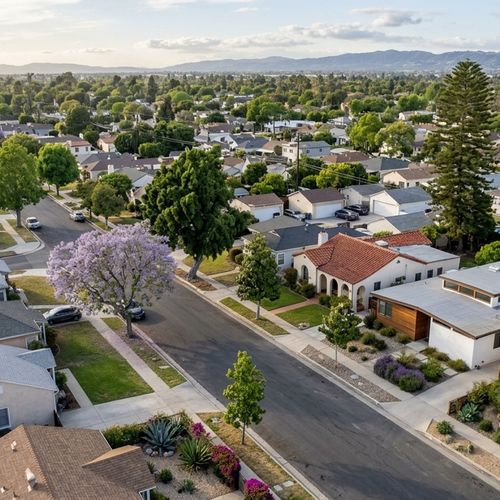


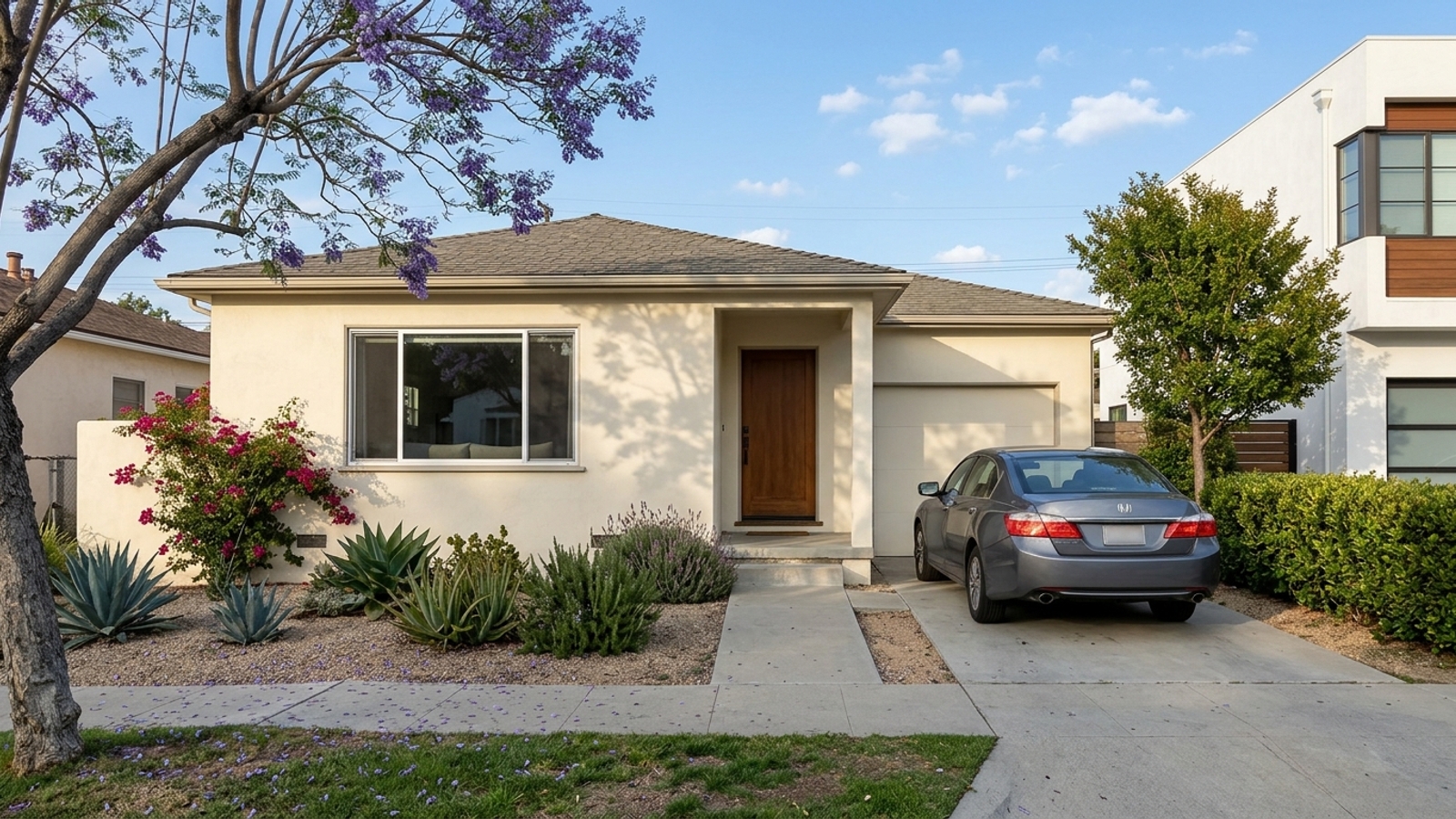
Mar Vista sits on the Westside of Los Angeles, CA, with a suburban feel and a short drive to the coastline. Moving here means budgeting for one of the city's higher-priced housing markets.
Everyday expenses like groceries and utilities follow standard City of Los Angeles rates, but housing will dictate your monthly budget. Your choices come down to buying a detached house, hunting for a rare condo, or renting an apartment.
Key takeaway
Living in Mar Vista is expensive mainly because of housing. Single-family home prices rose sharply in the 90 days ending September 30, 2026, and were still rising. If a house is out of reach, a condo or townhome is the lower-cost way to own here, though only a handful sell each quarter. Renting is the way to live here without a jumbo loan.
Who this guide is for
You're weighing whether a move to Mar Vista fits your budget and need to know what a house, a condo, or a rental would cost you each month.
What it costs to live in Mar Vista
Mar Vista's cost of living is a housing decision, not a grocery-bill one. Single-family homes made up 71 of the 83 sales in the 90 days ending September 30, 2026, and those houses rose strongly year over year, pushing the entry point higher for buyers.
Everyday costs follow standard City of Los Angeles rates, covered later on this page. The realistic ways to lower your monthly bill are the thin condo and townhome segment, or renting an apartment. Bargaining down a house rarely works in a seller's market.
Buying a single-family home in Mar Vista
Detached houses dominate the Mar Vista real estate market. The median sale price for a single-family home recently hit $2,599,568, which means preparing for a high-balance mortgage and significant cash requirements upfront.
Down payment and monthly payment on a median-priced house
At 20% down on that single-family median, the down payment is about $519,914. The remaining loan is roughly $2,079,654, which is a jumbo loan, well above the 2026 Los Angeles County conforming limit of $1,249,125.
For illustration only: at a 7.24% rate on a 30-year fixed mortgage, principal and interest alone run over $14,000 a month. Jumbo rates differ from standard conforming loans, so get a jumbo rate quote and ask how many months of cash reserves the lender requires after closing. Jumbo lenders often require larger cash reserves on top of the down payment.
Property tax and homeowners insurance
California property taxes start at 1% of the purchase price, plus voter-approved debt and direct assessments. On a median-priced home, expect property taxes to add thousands to your monthly payment.
Your Mar Vista tax bill is set by your purchase price, not the previous owner's, so a long-held neighbor may pay a fraction of what you will. Ask the listing agent for the seller's most recent property tax bill to see direct assessments like stormwater and lighting charges. Direct assessments appear on top of the percentage rate, so that's where the uncertainty sits.
Get homeowners insurance quotes before making an offer, and confirm the home is insurable on the standard market.
How much house your budget buys
The median price per square foot for a single-family home is roughly $1,101. At the single-family median, every $1 million buys only about 900 square feet of house. A $2,000,000 budget buys roughly 1,816 square feet at the median, which gives you a way to sanity-check a listing's size against your price ceiling.
That per-square-foot figure blends lot sizes, remodels, and teardowns. A small original bungalow on a standard lot can price well above that median per square foot because buyers are paying for the land, so check land value in the listing's comps.
Negotiating on price in Mar Vista
Single-family homes took a median 60 days to sell, yet 34.2% still sold above the asking price. A long listing period alone does not signal a discount.
Room to negotiate is more likely on homes that have sat well past the median. Ask for the listing's price-change history and days on market before deciding how much to offer, and check local market trends and outlook for recent shifts. With single-family supply under three months, well-priced homes still draw multiple offers, so budgeting to the list price can leave you short on the homes you want most.
Buying a condo or townhome in Mar Vista
Attached housing offers a lower entry price, but inventory is scarce. Only 12 of 83 sales and 20 of 84 listings were something other than a single-family house in the 90 days ending September 30, 2026.
All homes rose 2.4% year over year while single-family prices rose more sharply, suggesting the non-house segment was softer. That hypothesis rests on just 12 sales, so treat it as a rough signal rather than a firm conclusion. Request recent closed condo and townhome sales, since the listings data has no separate condo median.
Condo and townhome supply
The 12 non-house sales show how few condos and townhomes hit the market here in a typical quarter. If you want to own in Mar Vista for less than a house costs, condos and townhomes are the place to start.
Lean on recent comps to price an offer rather than general neighborhood trends. With so few sales, a condo's resale price can swing on one or two comps, and you may wait months for the right unit to list.
HOA dues and condo financing
Monthly homeowner association dues add directly to your housing costs and count toward a lender's debt-to-income limit. Ask the HOA for current monthly dues, what they cover, the latest reserve study, and any pending special assessments. Check HUD's FHA condominium approval lookup if you plan to use an FHA loan.
An underfunded reserve can mean a special assessment of thousands of dollars soon after you buy. Read the reserve study before you remove contingencies.
Renting in Mar Vista
Renting bypasses the need for a jumbo loan and a massive down payment. The median gross rent in ZIP code 90066 is $2,279 per month, which sits well above the national median of $1,413.
Census rent figures include tenants who signed leases years ago, so the rent you're quoted on a new lease will usually be higher than the median. The ZIP code also extends beyond the neighborhood boundaries.
What rent costs in Mar Vista
If you want to live here without a down payment or jumbo loan, start with renting and check older buildings for rent-stabilized status. Some older apartments qualify for local rent control, capping annual increases. Mar Vista Gardens is a public housing community run by the Housing Authority of the City of Los Angeles, with income-based eligibility and a waitlist.
Rent-stabilized units rarely come vacant, and newer buildings aren't covered, so the cheapest rents are the hardest to find.
Renting a house versus owning one
A rental house costs less per month than the principal, interest, taxes, and insurance on a purchase at the single-family median. You can pull current house rentals as a check to see the exact monthly gap.
That gap shows what owning costs each month beyond renting, which you should weigh against equity and transaction costs. Buying and then selling within a few years can cost more than renting for the same period once transaction costs are counted, so your time horizon matters more than the monthly gap.
Everyday costs beyond housing
Living in Mar Vista means paying City of Los Angeles rates for utilities and taxes. These running costs apply whether you own a house, buy a condo, or rent an apartment.
Utilities and sales tax
Mar Vista is served by the Los Angeles Department of Water and Power (LADWP) for electricity and water, and SoCalGas for gas. Your LADWP bill can include water, power, sewer, and trash in one statement, so compare total bills, not just electric rates, when budgeting.
The combined sales and use tax rate in the City of Los Angeles is currently 10.25%, which affects everything from furnishing a new home to buying a car. Tiered pricing means summer air conditioning and garden watering can push a bill into higher-priced tiers. Ask the seller or landlord for 12 months of LADWP and SoCalGas bills.
Getting around and transportation costs
Most Mar Vista budgets include a car, and gas prices run high. The average price for regular gasoline in the Los Angeles-Long Beach metro area recently hit roughly $5.98 per gallon.
Public transit offers an alternative. The Metro E Line stations are nearby, bus lines run along Venice Boulevard, and the current Metro fare is $1.75, with a $5 daily cap and an $18 weekly cap. The rail stations sit near the edge of the neighborhood, though, so transit-first living depends on where in Mar Vista you live. Check walking time from a specific address to the nearest E Line station before planning a transit-first budget.
How to decide if Mar Vista fits your budget
- Can you cover a 20% down payment on a median-priced house and qualify for a jumbo loan? If yes, go to "Buying a single-family home in Mar Vista." If not, read "Buying a condo or townhome in Mar Vista" and "Renting in Mar Vista."
- Do you need a detached house and yard, or would shared walls and an HOA work? If shared walls are fine, start with "Condo and townhome supply" and "HOA dues and condo financing."
- How long do you expect to stay? If it may be only a few years, compare the numbers in "Renting a house versus owning one" before committing to a purchase.
- Will you commute by car or by transit? Read "Getting around and transportation costs" to see what each adds to the monthly budget.
If you want a detached house with a yard and can finance a jumbo loan, start with single-family listings, using the price-per-square-foot math in "How much house your budget buys." If you want room to negotiate below asking, look at single-family listings that have sat well past the 60-day median.
Check livability and fit to see if the area matches your lifestyle. If you'd like current condo comps or a jumbo-loan budget check, Charles Fisher can pull them. Evaluating the pros and cons of living in Mar Vista provides a clearer picture of daily life in the area.
At a glance
- Median sale price, all homes: $2,319,350 (90 days ending Sept. 30, 2026)
- Median sale price, single-family homes: $2,599,568 (90 days ending Sept. 30, 2026)
- Year-over-year price change: all homes +2.4%; single-family +7% (90 days ending Sept. 30, 2026)
- Median price per square foot: all homes $1,079; single-family $1,101 (90 days ending Sept. 30, 2026)
- Homes sold: all homes 83; single-family 71 (90 days ending Sept. 30, 2026)
- Median days on market: all homes 61; single-family 60 (90 days ending Sept. 30, 2026)
- Sale-to-list price: all homes 100.2%; single-family 100.6% (90 days ending Sept. 30, 2026)
- Share sold above list price: all homes 32%; single-family 34.2% (90 days ending Sept. 30, 2026)
- Months of supply: all homes 3.1; single-family 2.7 (90 days ending Sept. 30, 2026)
- Homes for sale (inventory): all homes 84; single-family 64 (as of the 90 days ending Sept. 30, 2026)
Mar Vista cost of living FAQs
Is Mar Vista expensive?
Yes, the all-homes median sale price was roughly $2,319,350 in the 90 days ending September 30, 2026. This sits higher than the overall City of Los Angeles median for the same period. You'll pay a premium to buy a home in this Westside neighborhood.
Is Mar Vista a wealthy area?
Home values place Mar Vista among high-value Westside housing. The all-homes median price per square foot recently reached $1,079, and prices are highest in the blocks closest to the coast.
Can I live in Mar Vista on $3,000 a month?
It depends on your housing arrangement. While $3,000 covers the median gross rent for the ZIP code, it leaves little room for utilities and transportation. LADWP's standard residential electric rate starts at around $0.24 to $0.27 per kWh in the lowest tier, and gas costs near $5.98 a gallon quickly eat into a tight budget. Ownership costs are far above this level.
Does Mar Vista have rent control?
Yes, Mar Vista is in the City of Los Angeles, so the city's Rent Stabilization Ordinance applies to qualifying units. The ordinance generally covers multi-unit rental properties built before October 1, 1978, and currently caps annual rent increases at 3% through June 30, 2027. Confirm a specific unit's status through the city's ZIMAS lookup or the Los Angeles Housing Department.
Is Mar Vista part of the City of Los Angeles?
Yes, it's a neighborhood within the City of Los Angeles, not its own city. This means residents pay LADWP utility rates and the 10.25% City of LA sales tax. High-value property sales are also subject to Measure ULA's transfer tax, which currently adds a 4% tax on sales over $5 million and 5.5% on sales over $10 million.
What salary do you need to live in Mar Vista?
Using the common 28% housing-to-income guideline, covering the principal, interest, taxes, and insurance on a median-priced house requires a gross annual income well over $600,000. Lenders set their own debt-to-income limits for jumbo loans, so ask your lender what they require. A renter's required income is much lower and depends entirely on the rent they choose.
Why is Mar Vista so expensive?
Prices are driven by tight supply and a coastal location. Single-family homes recently had just 2.7 months of supply, keeping inventory low. The neighborhood sits just 5 miles from the Santa Monica Pier and about a 10-minute drive from Venice Beach.
How far is Mar Vista from the beach?
Santa Monica Pier is about 5 miles from Mar Vista, roughly a 15-minute drive. Venice Beach is even closer, about a 10-minute drive away. This proximity gives residents beach access without paying a direct beachfront price.
Sources
- Redfin: Data Center
- Calculated Risk: FHFA Announces Baseline Conforming
- Freddie Mac: PMMS
- ZIP-Codes.com: ZIP Code 90066
- Los Angeles Housing Department: Renter Protections
- LADWP: Residential Rates
- California Calculators: Sales Tax Los Angeles
- AAA Gas Prices: California
- Wikipedia: Measure ULA
- Forbes: Exploring Mar Vista
Check out this article next