

Manhattan Beach, CA runs at a pace most coastal markets don't. The median sale price sits around $3,490,000 citywide, homes are moving in roughly 40 days, and buyers who come in without a clear sense of what they want tend to lose ground fast. If you're already narrowing down the best neighborhoods in Manhattan Beach, you've probably landed on the same comparison most serious buyers land on: the Hill Section or the Sand Section.
These two neighborhoods don't just feel different - they're structured differently, zoned differently, and built differently. Your choice comes down to how much lot space you want, how close you need to be to the water, and how you plan to deal with parking. Here's what separates them.
Geographic Boundaries and Topography
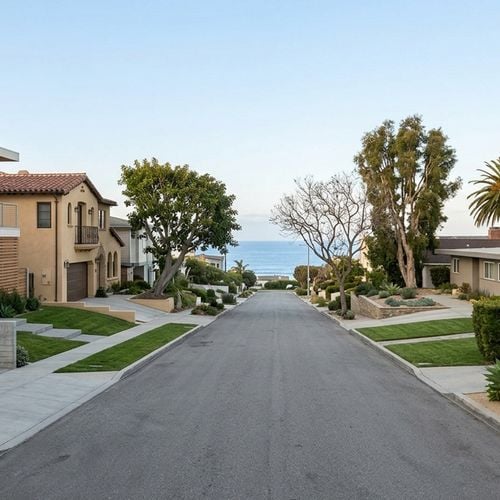
The Hill Section runs from Sepulveda Boulevard on the east to Ardmore Avenue on the west, Manhattan Beach Boulevard to the north, and Boundary Place to the south. The elevation here is real - many properties sit high enough to look out over the city and toward the water, and the rolling topography shapes how every home sits on its lot.
The Sand Section is bounded by the Pacific Ocean to the west, Valley Drive and the Tree Section to the east, El Segundo to the north, and Hermosa Beach to the south. The terrain flattens out in places before it slopes down to the shoreline, and the neighborhood sits right against the water.
That elevation difference shows up every day. Hill Section residents have a noticeable grade to deal with whenever they head down to the beach or downtown. Sand Section residents are at or near sea level - the sand and the Strand are right there.
Real Estate, Home Styles, and Lot Sizes
Lot size is the sharpest dividing line between these two neighborhoods, and it drives almost everything else - price per square foot, architecture, parking, and how much private outdoor space you'll have.
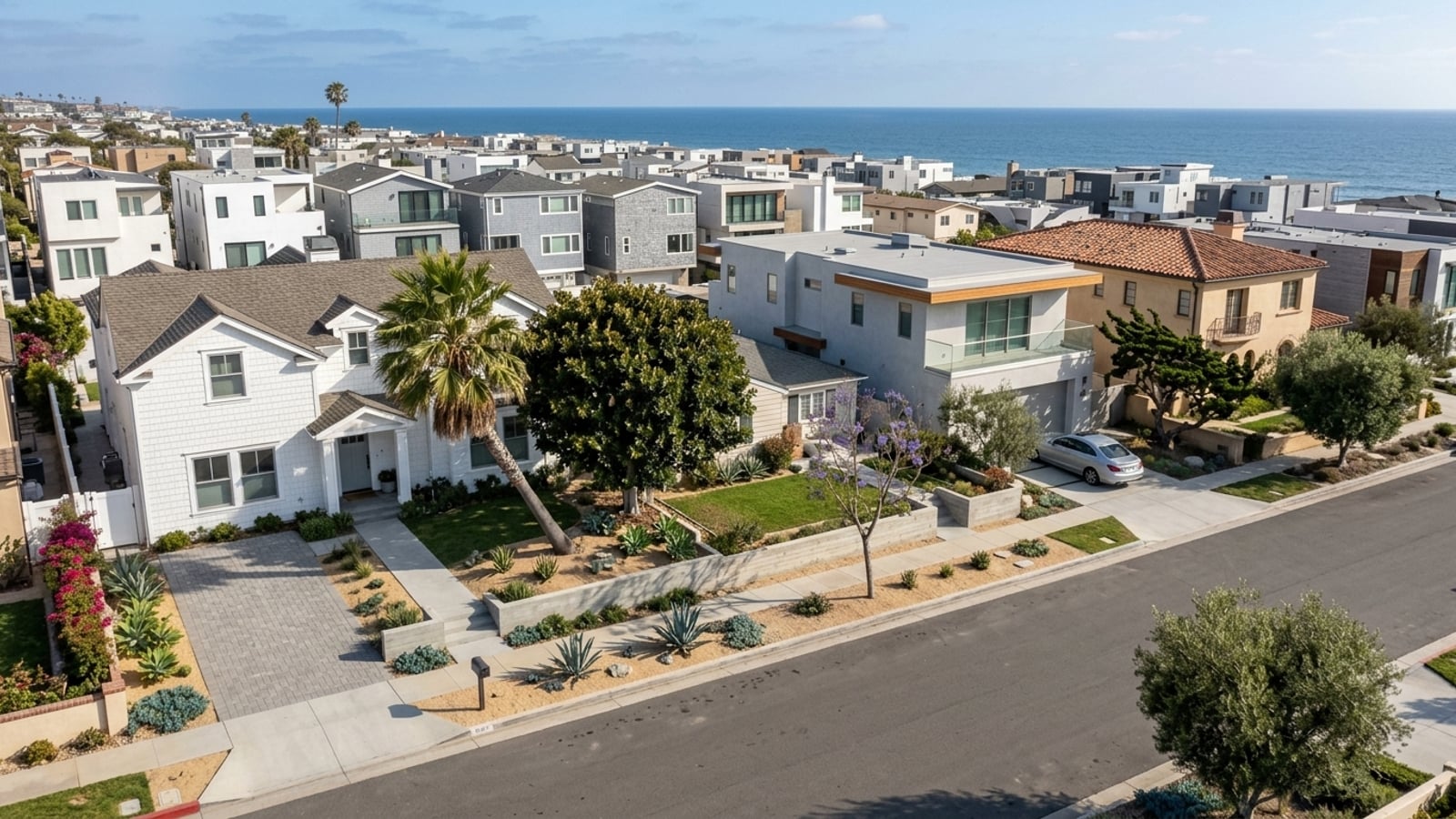
Hill Section lots typically range from 7,500 to 15,000 square feet, with the average coming in around 7,000 square feet. That gives you room for wider floor plans, real yard space, and detached accessory structures. The Sand Section works on an entirely different scale: the typical full lot is 2,700 square feet, often 30 by 90 feet, with many parcels split into half lots ranging from 1,350 to 1,750 square feet. When your footprint is that constrained, you build up.
Architecture in the Hill Section
The Hill Section's wider lots produce the kind of homes you'd expect - larger traditional estates, expansive modern builds, substantial outdoor living areas, private pools. The streetscapes feel spread out because they are. If a traditional neighborhood layout with meaningful front yards is what you're after, your search starts here.
Sand Section Homes and Walk Streets
Sand Section architecture is a direct response to those smaller 2,700-square-foot lots. Three-story modern beach homes, townhouses, and original cottages sit close together, and the design pushes vertical wherever it can. You'll also encounter the walk streets that make this neighborhood genuinely distinctive - pedestrian-only pathways that replace standard road frontage, with vehicle access and garages pushed to the rear alleys.
Pricing and Real Estate Market Trends
The Sand Section runs higher on a per-square-foot basis - around $2,400 per square foot on average versus the Hill Section's $1,690. That gap reflects what it costs to own land this close to the ocean when buildable coastal parcels are this scarce.
Total purchase prices tell a different story. The Hill Section's median listing price falls roughly between $7.3 million and $8 million, with recent median sales prices reported up to $12.5 million - that's the size of the homes and lots doing the work. The Sand Section's median listing price is approximately $5.6 million, with recent median sales prices hovering around $3.88 million. A lower total number, but you're paying more for every square foot of land and living space you get.
Zoning, Building Heights, and Parking Rules
The Sand Section permits building heights up to 30 feet, which gets you three stories of living space. The Hill Section caps out at 26 feet - two above-ground stories, full stop.
That single difference shapes the entire built environment in each area. Sand Section builders use the third story to clear neighboring rooflines, which is why you so often see the primary living room and kitchen pushed to the top floor. Hill Section builders work within two stories and rely on the land's natural elevation to hold their views.
Parking is its own conversation. Sand Section street parking is tight - permits, strict time limits, the works - and properties lean on tandem garages off rear alleys that won't fit larger vehicles. New construction in this zone requires enclosed garage space for three cars. The Hill Section runs wider streets, standard front-facing garages, and enough room that guests can park without stress.
Proximity to Commuter Routes and Local Amenities
The Hill Section's eastern edge runs right along Sepulveda Boulevard. If you're commuting north or south, you're on that route almost immediately - no grinding through narrow streets near the beach to get there.
Getting out of the Sand Section takes a bit more patience. You're living against the Pacific Ocean, which is exactly the point, but working your way to Sepulveda Boulevard or any other major artery means driving up through the city's local streets first.
Both neighborhoods put you within reach of downtown Manhattan Beach's shops and restaurants. The Sand Section sits adjacent to the commercial district - a lot of residents can walk to dinner. Hill Section residents are a bit further out and typically drive, or accept an uphill return trip on foot.
Frequently Asked Questions
Which is more expensive, the Hill Section or the Sand Section?
It depends how you're measuring it. On total price, the Hill Section runs higher - median listings fall between $7.3 million and $8 million, driven by the larger lots and homes. On a per-square-foot basis, the Sand Section is the more expensive market, averaging around $2,400 per square foot compared to the Hill Section's $1,690.
What are the typical lot sizes in the Hill Section compared to the Sand Section?
Hill Section lots typically range from 7,500 to 15,000 square feet and average around 7,000 square feet. Sand Section parcels are much smaller - a typical full lot measures 2,700 square feet, with half lots running from 1,350 to 1,750 square feet.
How does parking availability differ between the Sand Section and the Hill Section?
The Hill Section has standard front-facing garages, wide streets, and room for guests to park without a problem. The Sand Section has limited street parking with permits and time restrictions, and most homes rely on tandem garages accessed from rear alleys.
Can you get ocean views in both the Hill Section and the Sand Section?
Yes, but they're earned differently. The Hill Section uses its natural elevation to look out over the city toward the water. The Sand Section uses three-story building heights and sheer proximity to the beach.
Which Manhattan Beach neighborhood is better for commuting to Los Angeles, the Hill Section or the Sand Section?
The Hill Section. Its eastern border runs along Sepulveda Boulevard, so you're accessing that north-south route directly, without threading through the slower, narrower streets near the beach.
How do building restrictions and height limits differ if I want to build a custom home in the Sand Section versus the Hill Section?
The Sand Section allows up to 30 feet, which gets you three stories. The Hill Section limits you to 26 feet and a maximum of two above-ground stories. New builds in the Sand Section also carry a requirement for enclosed garage space for three cars.
Check out this article next